Yandere Meaning Explained: Complete Guide to the Anime Character Type
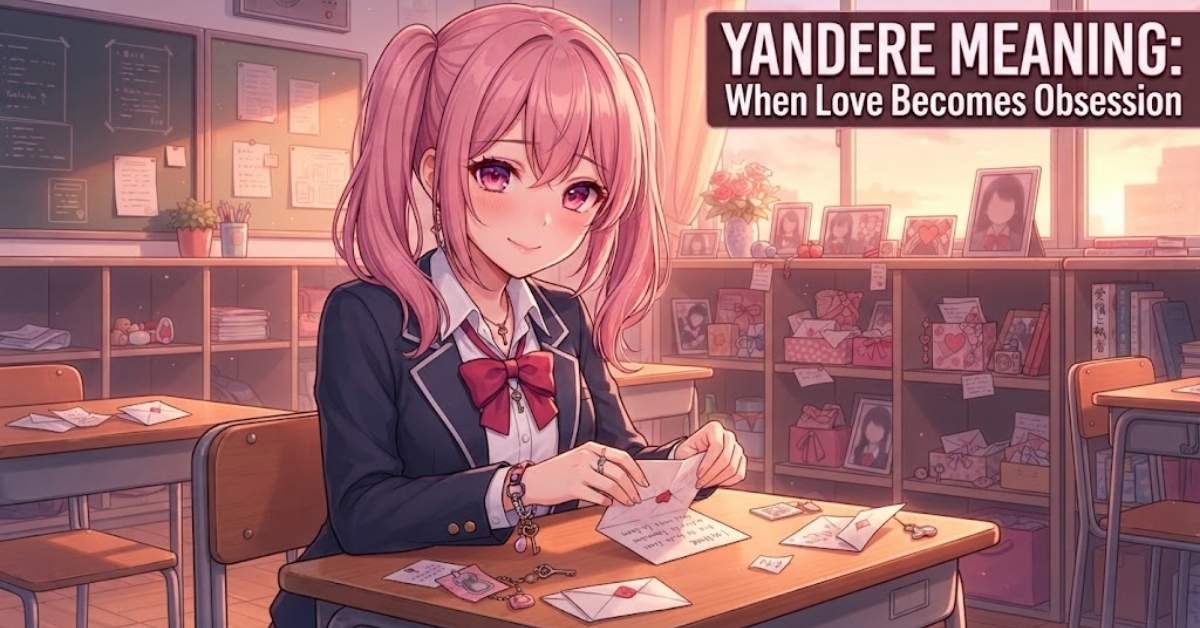
So you keep seeing the word yandere pop up in anime comments and you’re not totally sure what it means. Here’s the short answer. A yandere is a character type in anime and manga who seems sweet and loving on the outside but hides a darker, obsessive side underneath.That contrast is the whole point. One minute they’re blushing and shy. The next, they’re doing something unsettling in the name of love. It’s a wild mix, and honestly, it’s part of why the term has stuck around in anime culture for so long.
Stick with me and we’ll walk through where the word came from, how it shows up in stories, how it compares to other dere types like tsundere and kuudere, and why fans just can’t stop talking about it.
Meaning or Definition of Yandere
The word yandere comes from two Japanese words mashed together. “Yanderu” means to be sick or unwell, and “dere dere” means lovestruck or affectionate. Put them together and you get someone whose love has gone sick, twisted, or extreme.
In plain terms, a yandere character starts off warm, gentle, and caring. But underneath that calm exterior sits emotional instability, deep insecurity, and a fear of abandonment that can flip their affection into something disturbing.
This isn’t just a random label fans slap on any clingy character. It’s become one of the most recognized Japanese character archetypes, especially within romance anime and psychological anime. The appeal lies in that tension. You genuinely don’t know when the sweetness will crack.
The word actually started as Japanese language term slang before it crossed over into English speaking fan spaces. Once translated content and fansubs took off, English speaking viewers picked it up fast, and it slotted neatly into the wider vocabulary fans already used for manga culture and Japanese pop culture.
What’s interesting is how flexible the term turned out to be. It works for a side character played for laughs in a slice of life anime, and it works just as well for a lead role in a thriller anime built entirely around tension and dread. Same word, very different moods depending on the show.
Comparison of Related Character Types
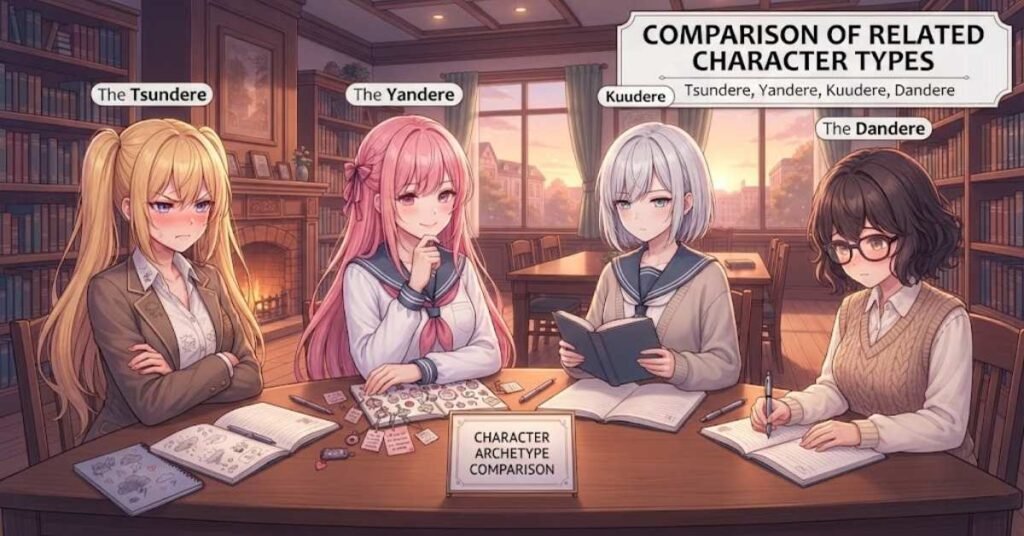
Anime fans love sorting characters into boxes, and the dere types are basically anime’s version of personality quizzes. Each one plays with a different flavor of affection, and knowing the differences actually makes shows way more fun to watch.
A tsundere is cold or harsh at first, then slowly warms up. Think of someone who insults you one day and blushes around you the next. It’s a classic romance storytelling device because the slow reveal builds real chemistry.
A kuudere stays calm and distant almost all the time, rarely showing emotion even when they clearly feel something. A dandere is shy and quiet until they’re comfortable, then they open up completely. The yandere, though, is the one where sweetness curdles into something sinister, and that’s what sets it apart from the rest of these character personality types.
Here’s a quick side by side to keep them straight:
- Tsundere: cold first, warm later
- Kuudere: calm and distant throughout
- Dandere: shy until comfortable, then open
- Yandere: sweet on the surface, obsessive underneath
None of these labels are official psychology terms. They’re fan made shorthand that grew organically out of online communities discussing character behavior across countless shows. That grassroots origin is actually part of the charm. Fans built this vocabulary themselves, one debate thread at a time.
Practical Usage of Yandere in Storytelling
Writers don’t just throw a yandere character into a story for shock value. They use this fictional trope to build story tension and keep readers guessing about what’s really going on beneath a calm surface.
Think about it from a narrative structure angle. A character who’s obviously dangerous gives you no surprises. But one who seems perfectly normal until something snaps? That’s where real suspense storytelling lives, and it keeps audiences hooked episode after episode.
This trope also lets creators explore heavier themes without turning the whole show grim. A series can stay light and even funny while still touching on love turning into obsession or possessive behavior. That balance is tricky to pull off, but when it works, it’s genuinely memorable dramatic storytelling.
Good writers also use the yandere reveal as a pacing tool. They’ll spend several episodes building trust in a character, letting the audience genuinely like them, before pulling back the curtain. That delayed character transformation hits harder than if the danger were obvious from episode one, and it keeps viewers rewatching earlier scenes for clues they missed.
Examples of Yandere Behavior in Fiction
Yandere behavior usually starts small and escalates. It might begin with a character getting oddly jealous over a simple conversation, then slowly move toward isolating the person they love from friends and classmates.
Common signs include intense jealousy over minor interactions, a need for constant reassurance, and sudden mood shifts that feel almost like a switch flipping. Some fictional narratives push this further into full social isolation, where the yandere tries to cut their love interest off from everyone else.
In more extreme stories, this behavior crosses into genuinely disturbing territory, including threats or violence toward anyone seen as competition. Not every yandere goes that far, though. Some stay firmly in comedic territory, where the obsession is played for laughs rather than horror.
You’ll also notice recurring visual cues creators use to hint at a yandere before the twist lands. A slightly too long stare, a smile that doesn’t quite reach the eyes, or a sudden quiet moment after a joke about someone else’s love interest. These small details reward attentive viewers and add another layer to the show’s suspense element long before anything actually happens on screen.
Common Use Cases of the Term Yandere
Outside of anime discussions, the word has spread pretty far. You’ll spot it in fan forums, social media discussions, and casual chats among anime viewers and manga readers who are describing a character’s vibe in one quick word.
It’s also common in fan fiction and original characters created by fans themselves. Writers often build their own yandere-style character just to explore that push and pull between affection and obsession in a fresh setting.
Even gaming communities use the term now, especially for characters in visual novels or dating sims who fit the same pattern. It’s become shorthand across online fandom culture, not just something locked inside anime forums anymore.
Similar Terms and Related Concepts
If you’re new to this corner of anime terminology, a few related words tend to show up right alongside yandere. Knowing them helps you follow fan conversations without getting lost.
Tsundere, kuudere, and dandere are the big three siblings in this family, each describing a different personality arc. There’s also broader talk of personality archetypes in character design, since these labels help writers and fans quickly communicate a character’s emotional style without a long explanation.
You might also see comparisons to unrelated internet slang like NPC meaning or poggers meaning, simply because all of these terms grew out of the same online spaces where anime fandom and gaming culture overlap constantly.
Common Mistakes About Yandere
One big mix-up people make is treating yandere as an actual mental health label. It’s not. This is a fictional character category, not a psychological category used by professionals, and mixing the two spreads confusion fast.
Another mistake is assuming every yandere is violent or scary. Plenty of yandere characters stay purely comedic, with their “obsession” limited to overreacting about homework or getting flustered during a date. The intensity varies a lot depending on the story’s tone.
People also sometimes confuse yandere with tsundere simply because both start with a certain type of cold or intense energy. The real difference comes down to what’s underneath. Tsundere hides softness. Yandere hides danger.
Why Yandere Characters Resonate With Fans
There’s something almost magnetic about a character who keeps you guessing. Fans often say the appeal comes from that unpredictability, since you’re never fully sure when the sweet mask will slip.
It also taps into real emotional territory, even if it’s exaggerated for fiction. Themes like fear of loss, emotional dependency, and jealousy tropes are relatable on some level, just cranked up to an extreme most people will never actually experience.
For a lot of viewers, it’s simply fun to watch a complex character unravel a little at a time. That slow reveal of dark personality traits hiding under a friendly exterior gives a story real psychological depth without needing constant action or drama.
Yandere in Real Life: Where Fiction and Reality Diverge
It’s worth being direct about something important here. Possessive behavior, controlling actions, and isolating a partner are harmful behavior in real-life relationships, full stop. What reads as dramatic or even romantic in fiction does not translate that way outside a story.
Healthy relationships are built on trust, independence, and mutual respect, not jealousy or control. Fiction gets to exaggerate for entertainment, but that gap between fictional relationships and reality matters, especially for younger fans still figuring out what healthy love actually looks like.
So enjoy the trope for what it is: a storytelling device. Just keep that clear line between romance and danger in fiction and what actually makes a relationship work in the real world.
Conclusion
At its core, a yandere is a character whose loving side hides something far more intense underneath. That contrast between sweet personality and hidden darkness is exactly why the archetype has stuck around in anime culture for years.
Whether you’re binge watching a new series or writing your own original characters, understanding this term gives you a sharper eye for character analysis and helps you follow fan discussions without missing a beat. Got a favorite yandere character from a show? Drop it in the comments, I’d genuinely love to hear which one stuck with you.
FAQs
What does yandere mean in anime?
It describes a character who seems sweet and caring at first but hides an obsessive, sometimes dangerous side underneath that surfaces once their affection turns extreme.
Is yandere a real personality type?
No. It’s a fictional character category used in storytelling, not a recognized psychological category or clinical label.
Why are yandere characters popular?
Fans enjoy the unpredictability and psychological depth they bring to a story, along with the tension of not knowing when their calm exterior will crack.
What is the difference between yandere and tsundere?
A tsundere starts cold and slowly warms up, while a yandere starts warm and sweet before revealing an obsessive or unstable side.
Are yandere characters always dangerous?
Not always. Some stay purely comedic and never cross into anything threatening, while others lean into darker, more intense territory depending on the story.
Can yandere characters be positive in a story?
Yes, in the sense that they add real tension and depth to a narrative, even though their behavior itself isn’t something to root for in real life.
Where is the term yandere used most?
You’ll mostly find it in anime fandom spaces, fan forums, social media discussions, and fan fiction, though it’s spread into gaming communities too.