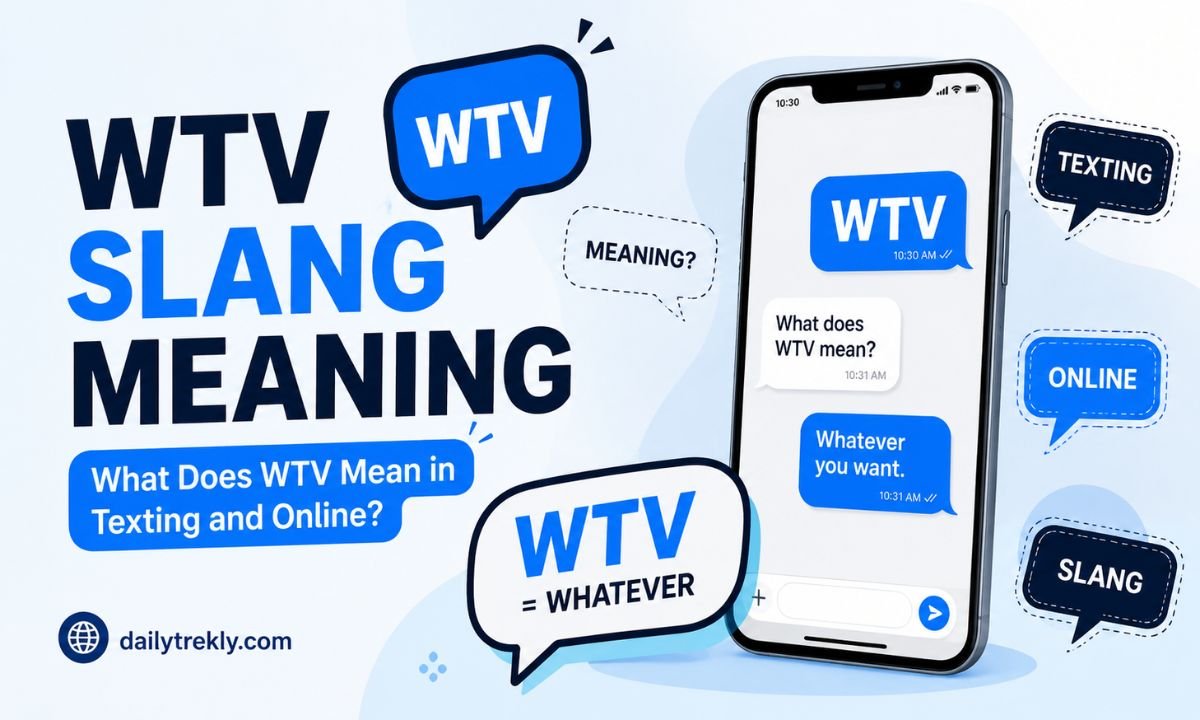
WTV Slang Meaning: What Does WTV Mean in Texting and Online?
You open a chat and someone replies with just three letters: “wtv.” No punctuation, no explanation, just three letters that could mean anything from “I’m easy either way” to “I’m done talking.” If you have ever paused mid-scroll trying to decode a message, you already understand why the WTV slang meaning matters. This guide breaks down exactly what WTV means, where it came from, and how to read the tone behind it so you never misread a text again.
What Does WTV Mean in Slang?
WTV is internet and texting shorthand for the word “whatever.” People use it to save keystrokes while expressing indifference, agreement, or a casual “it doesn’t matter to me” attitude. The WTV slang meaning always traces back to this one root word, even though the emotional tone attached to it can shift dramatically depending on the conversation.
Simple Definition
WTV means “whatever.” It is a texting abbreviation used to show indifference, easygoing agreement, or mild dismissal in a chat, comment, or DM.
Why Is “WTV” So Popular?
WTV is popular because it fits the speed of modern digital conversation. Typing three letters instead of eight feels quicker in a group chat, a gaming lobby, or a fast-moving comment thread. It also lets people express a laid-back, low-effort tone without sounding overly formal, which matches the casual voice most people use online. Part of the WTV slang meaning’s staying power is exactly this efficiency, it does a lot of emotional work in very few characters.
WTV Slang Meaning in English
In standard English, “whatever” is a word of indifference, resignation, or open-ended agreement. The WTV slang meaning in English keeps that same core idea but compresses it into a fast, informal symbol. It is the digital equivalent of a shrug, a quick way to say “I don’t have a strong opinion” without typing a full sentence.
Origin and History of WTV
WTV emerged in the early 2000s alongside the rise of SMS texting, when character limits and slow keypads pushed people to shorten common words. “Whatever” was already a popular verbal expression of teen indifference in the 1990s, and texting culture simply compressed it further. By the 2010s, meme culture and group chats had pushed WTV into everyday use across nearly every messaging platform. Tracing this history is useful because the WTV slang meaning has stayed remarkably stable even as the platforms carrying it have changed.
The Emotional Meaning Behind “WTV”
Tone, not spelling, decides what WTV actually communicates. The same three letters can carry very different weight depending on the conversation around them. This is where the WTV slang meaning gets genuinely layered, and knowing the five common emotional tones below makes it far easier to read a message correctly.
1️⃣ Neutral or Chill
Used when someone genuinely has no preference. Example: “Pizza or tacos? WTV, I’m good with either.”
2️⃣ Dismissive or Uninterested
Used to signal that a topic is not worth further discussion. It often shows up when someone wants to move on quickly.
3️⃣ Frustrated or Annoyed
Used at the end of an argument or disagreement to shut down the conversation without escalating it further.
4️⃣ Sarcastic or Passive-Aggressive
Used when the words say “I don’t care” but the tone implies the opposite, often paired with a delayed reply or a cold follow-up.
5️⃣ Accepting or Letting Go
Used when someone is choosing not to fight a decision, signaling calm acceptance rather than anger.
🧾 How to Use WTV in a Sentence (Real Examples)
Casual Texting
“I’m down for wtv tonight, you pick the place.”
Social Media Comments
“lol wtv, still a great video 😂”
Gaming Chat
“wtv let’s just queue, we’re wasting time arguing.”
Teen Conversations
“Mom said I can go wtv time works for her.”
Relationship Conversations
“wtv you think is best, I trust your judgment.”
WTV vs. Whatever: Is There a Difference?
WTV and whatever share the exact same core meaning. The only real difference between WTV and whatever is formality and speed, not definition. WTV feels faster, more casual, and more common in fast-paced digital spaces, while “whatever” reads as more deliberate and slightly more serious in tone.
| Feature | WTV | Whatever |
| Formality | Very casual | Casual to neutral |
| Best used in | Texts, comments, gaming chat | Speech, texts, writing |
| Typing speed | Faster (3 letters) | Slower (8 letters) |
| Common platforms | TikTok, Snapchat, Discord | All platforms and speech |
Common Variations and Related Slang
The WTV slang meaning has also spawned a small family of related shorthand terms, each with its own slightly different flavor.
🔹 Variations
- Wtv or wtv (lowercase, no difference in meaning)
- Whatev or whatevs, a spoken shorthand version
- W/e, an older forum-era abbreviation
- WTVTF, a blend of WTV and WTF used for stronger indifference or confusion
🔹 Similar Slang Expressions
- IDC — I don’t care
- IDGAF — a stronger, more blunt version of not caring
- NVM — never mind
- K — a short, sometimes cold acknowledgment
When NOT to Use WTV
WTV is built for casual spaces, so it can easily feel careless or unprofessional outside them. WTV should be avoided in any conversation where tone and clarity genuinely matter.
Avoid Using WTV In:
- Job applications, resumes, or cover letters
- Emails to teachers, managers, or clients
- Customer service conversations
- Serious emotional conversations that need a clear, thoughtful response
Better Alternatives to WTV (Depending on Situation)
| Situation | Better Alternative |
| Professional email | “Either option works for me.” |
| Serious conversation | “I don’t have a strong preference, what do you think?” |
| Customer service | “I’m flexible on this.” |
| Formal writing | “It does not matter which choice is made.” |
Is WTV Rude?
WTV is not inherently rude; its tone depends entirely on context. Among friends making a quick decision, it usually reads as relaxed and easygoing. In the middle of an argument or a serious question, the same word can come across as cold or dismissive.
WTV Slang Meaning in Chat
Inside a live chat thread, the WTV slang meaning is almost always about speed and low-stakes agreement. People use it to keep a fast conversation moving without stopping to type a full sentence, especially in group chats where several people are replying at once.
How WTV Is Used Across Platforms
The WTV slang meaning shifts slightly depending on where it shows up, since each platform has its own texting culture and pace.
📩 Text Messages
Used as a quick, casual reply to decisions or plans between friends and family.
📱 TikTok Comments
Used to brush off criticism or show a relaxed, unbothered attitude toward a video or opinion.
💬 Discord & Gaming Chats
Used to move past a disagreement quickly so gameplay is not interrupted by typing.
📸 Instagram & Snapchat
Used in DMs and story replies to show casual agreement or mild indifference.
🧵 Twitter/X Replies
Used in quick-fire replies to signal that a topic is not worth a longer response.
Psychological Meaning Behind Saying “Whatever” or “WTV”
Psychologically, saying “whatever” or WTV often functions as an emotional off-ramp. Using WTV can be a way to avoid conflict, protect emotional energy, or signal detachment without directly confronting a disagreement. For some people it is genuine ease; for others it is a defense mechanism used to end a conversation before it becomes uncomfortable.
WTV in Relationships & Friendships
The WTV slang meaning carries more emotional weight in close relationships than it does among casual acquaintances, since tone is easier to misread when feelings are already involved.
💔 In Romantic Relationships
WTV can feel especially loaded in a relationship because it often follows an unresolved disagreement, making it read as stonewalling rather than simple flexibility.
🤝 In Friendships
Among friends, WTV is usually lighter and more literal, often just meaning “I trust your choice” or “either option is fine with me.”
WTV in School and Teen Slang
WTV is one of the most common pieces of teen texting slang, widely used in school group chats, hallway texting, and social media comments. Teens often use it to sound effortlessly unbothered, whether or not they actually feel that way.
Is WTV Appropriate in Professional Settings?
WTV is not appropriate in professional settings. In workplace emails, meetings, or client messages, it can come across as careless or disengaged. Professional alternatives like “either option works” or “I’m flexible” communicate the same openness without sounding casual.
Common Misunderstandings About WTV
Because the WTV slang meaning depends so heavily on tone, it is one of the most frequently misread abbreviations in texting.
❌ Misconception 1: WTV always means anger
WTV is neutral by default; anger only enters the picture when the surrounding conversation is already tense.
❌ Misconception 2: WTV is always rude
Among friends and in casual chats, WTV is usually read as relaxed, not rude.
❌ Misconception 3: WTV only teenagers use it
Adults use WTV regularly in texting, gaming, and casual social media conversations.
❌ Misconception 4: WTV means “I don’t care about you”
WTV almost always refers to indifference about a topic or decision, not about the person in the conversation.
🔤 WTV vs. Similar Slang Abbreviations
| Abbreviation | Meaning | Typical Tone |
| WTV | Whatever | Neutral to dismissive |
| IDC | I don’t care | Blunt |
| IDGAF | I don’t give a f*** | Strong, blunt |
| NVM | Never mind | Neutral |
| K | Okay | Can feel cold |
How to Respond to Someone Who Says “WTV”
Friendly or Neutral Context
Reply simply, like “cool, I’ll pick then” or “sounds good.”
Emotional or Conflict Situation
Ask a gentle follow-up question, such as “are you actually okay with this?” to check the real tone behind the message.
Playful Context
Match the energy with a light reply or emoji rather than overanalyzing it.
READ MORE: TMU Meaning in Texting: What Does TMU Mean in Messages?
WTV in Different Cultures and Languages
WTV originated in English-language texting culture but is now recognized globally on social media. Non-English speakers frequently adopt it directly in English-language chats, even while texting in their native language, because it has become a universally understood piece of internet shorthand.
Why People Love Using WTV
People love WTV because it is short, flexible, and instantly recognizable. It lets someone sound relaxed and easygoing without overexplaining, and it fits naturally into the fast rhythm of texting, gaming, and social media commenting.
Summary: What Does WTV Mean?
WTV stands for “whatever” and is used in texting and online chat to express indifference, casual agreement, or mild dismissal. Its real meaning depends on tone, platform, and the relationship between the people texting, not on the letters themselves.
Final Thoughts
Understanding the WTV slang meaning comes down to one simple rule: context decides the tone. The same three letters can mean “I’m flexible,” “I’m annoyed,” or “let’s move on,” depending on where and how they are used. Once you can read the surrounding conversation, WTV stops being confusing and becomes just another normal part of everyday digital language.