Eaten or Aten: Which One Is Correct and Why It Matters
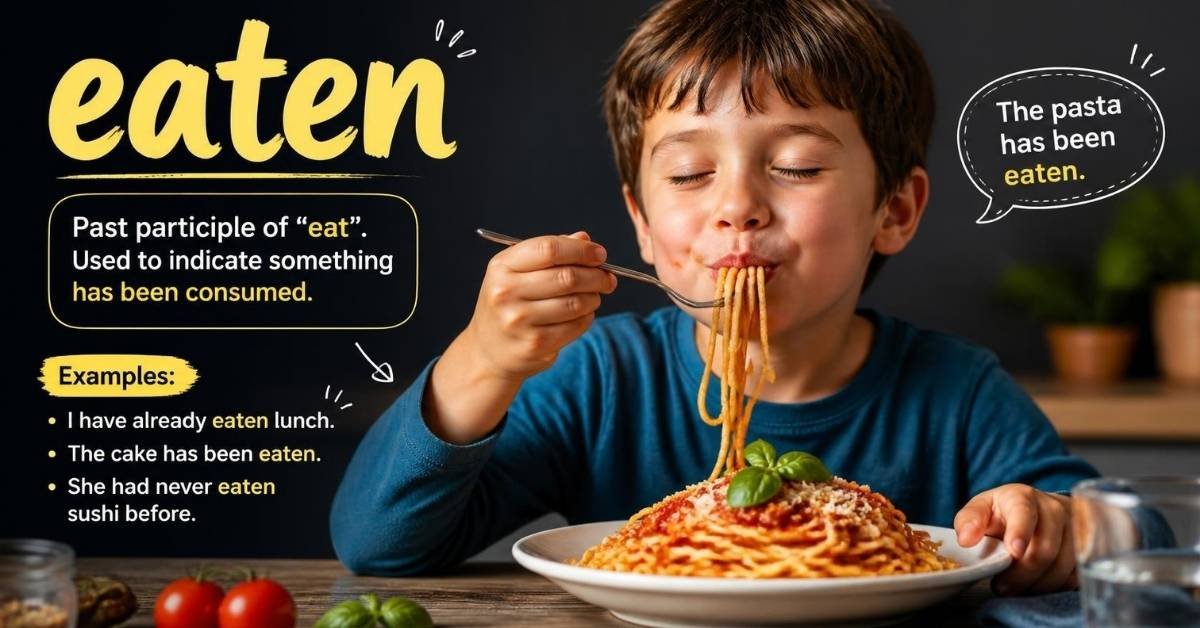
Eaten is the correct spelling. Always.Aten is not a real verb form in English grammar. It shows up because people mishear or mistype eaten, especially in fast typing or casual chats.
If you’re wondering which one to use in an email, a school paper, or a social post, go with eaten. There’s no version of standard English where aten replaces it as a verb.
What Do Eaten and Aten Mean?
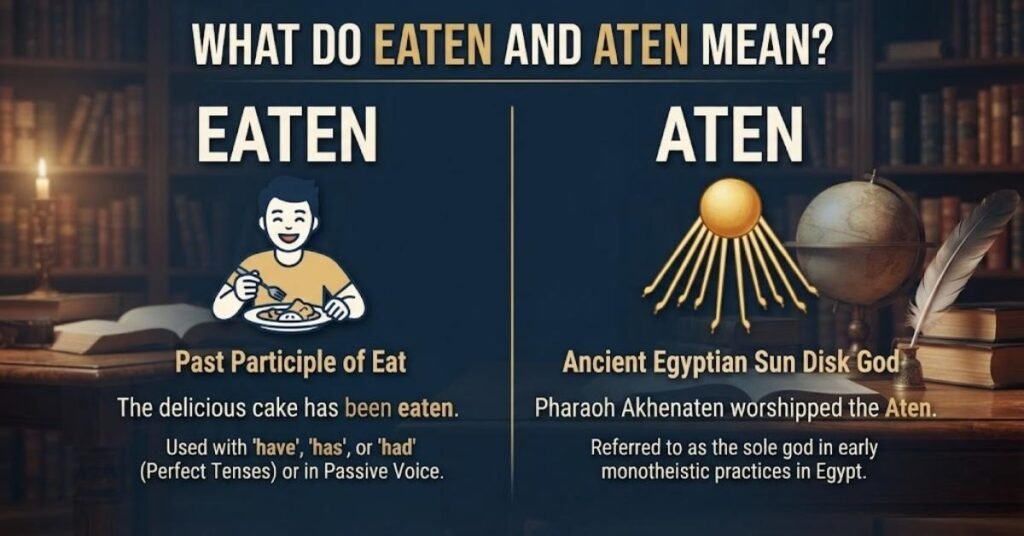
Let’s clear up the confusion right away. One word is a legit part of the English language. The other one isn’t, unless it’s a name.
Eaten
Eaten is the past participle of the irregular verb “eat.” You use it with helping verbs like have, has, or had.
“I have eaten breakfast” sounds natural. “She has eaten already” works the same way. This is basic verb conjugation, something every English learner runs into early on.
Aten
Aten isn’t a standard English word at all. As a proper noun, Aten refers to the ancient Egyptian sun disk deity, worshipped under Pharaoh Akhenaten.
Outside that historical context, aten is just a spelling mistake. It’s not listed in any major dictionaries as a verb form.
The Verb Forms of “Eat”
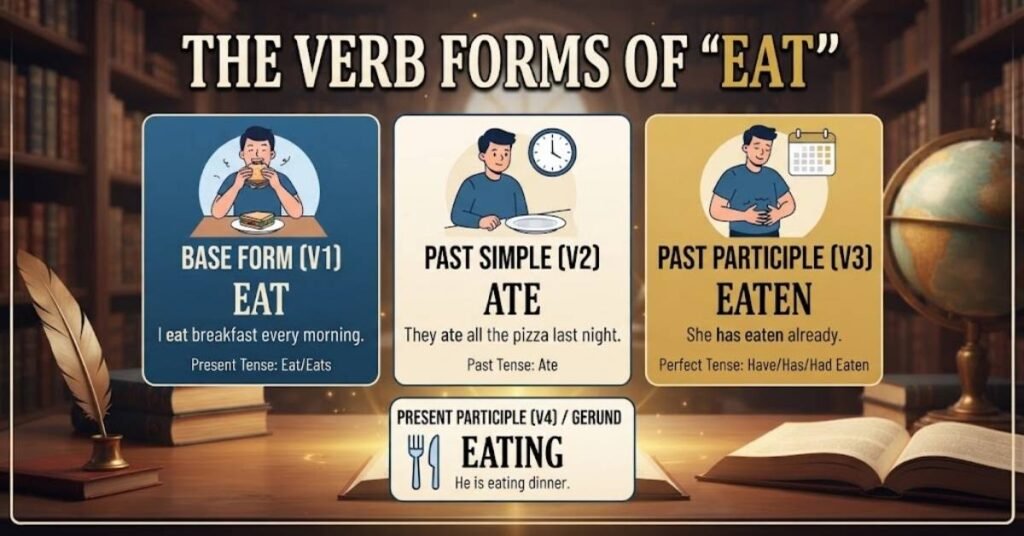
Here’s where the mix-up usually starts. “Eat” is an irregular verb, meaning it doesn’t follow the standard “-ed” pattern.
The three main forms are: eat (present tense), ate (past tense), and eaten (past participle). Notice how none of these forms produce anything close to “aten” on their own.
Eat works for things happening now. “I eat lunch at noon.”
Ate works alone for the past. “I ate lunch already.” No helping verb needed here.
Eaten never stands alone. It always needs a helping verb. “I have eaten,” not just “I eaten.” That’s a mistake a lot of casual writers make without realizing it.
The Origin of Eaten or Aten
English language history explains a lot here. Eaten traces back to Old English, from the word etan, meaning “to eat.”
Over centuries, spelling and pronunciation shifted, but the “eat” root stuck around. Etan became eat, and its past participle form became eaten, following patterns common to many irregular verb structures in Old English.
Aten, on the other hand, has zero connection to this English word history. It comes from Egyptian mythology, a completely separate origin story with nothing to do with verb forms or grammar at all.
British English vs American English Spelling
Good news if you’re stressing over regional spelling. Eaten stays exactly the same in British English and American English. No swaps, no exceptions.
This isn’t like “colour” versus “color” or “realise” versus “realize.” UK English and US English agree completely on this one verb form.
Comparison Table
| Region | Spelling | Example |
| British English (UK) | Eaten | “She has eaten her lunch.” |
| American English (US) | Eaten | “She has eaten her lunch.” |
| Aten (not standard) | Not applicable | Only valid as a proper noun (Egyptian deity) |
So if you’ve been searching for a regional differences answer here, there isn’t one. Eaten is universal across standard English usage.
Which Spelling Should You Use?
Simple answer: use eaten, every single time, in every context that isn’t about Egyptian history.
Whether you’re writing for school writing, work writing, or casual online content, eaten is the only valid English spelling for this past participle. There’s no debate among grammar guides on this point.
If spellcheck flags “aten” in your document, trust it. That red squiggly line is doing its job, catching a genuine spelling error before it goes public.
Common Mistakes with Eaten or Aten
Even fluent speakers slip up sometimes. Here are the three mistakes that show up most often in real writing.
Writing “aten” instead of “eaten”
This usually happens from typing too fast or trusting autocorrect too much. It’s an easy fix once you know what you’re looking for.
Using “eaten” without a helping verb
“I eaten dinner” is incorrect usage. You need auxiliary verbs like have, has, or had to make it grammatically sound. “I have eaten dinner” fixes it instantly.
Mixing up “ate” and “eaten”
This one trips up a lot of non-native English speakers and even some native ones. Remember: ate stands alone, eaten needs backup from a helping verb.
Eaten or Aten in Everyday Examples
Seeing these words in real situations makes the rule stick better than any textbook explanation. Let’s walk through where this actually comes up.
Emails
In work writing, precision matters. “I have already eaten, so let’s skip the lunch meeting” reads clean and professional. Typing “aten” here would look like a careless spelling mistake to any reader, especially in formal writing sent to clients or coworkers.
News
Journalists rely on correct usage to maintain credibility. A headline like “Crops Eaten by Pests Threaten Local Harvest” uses the past participle correctly, pairing it with the passive construction that news writing often uses.
Social Media
Here’s where things get looser. Informal writing on platforms like Twitter or Instagram sometimes drops the helping verbs entirely. “Already eaten lol” is technically missing “have,” but it’s accepted in casual writers’ everyday shorthand.
Formal Writing
Academic papers and business reports demand grammar accuracy. “The samples had been eaten by the test subjects before analysis began” shows proper verb pattern structure expected in formal writing settings.
Why People Get Confused Between Eaten and Aten
Pronunciation confusion plays a bigger role than most people realize. In spoken English, especially in fast speech, the “e” sound at the start of eaten can blur.
Say “eaten” quickly a few times. It can start sounding like it’s missing that opening vowel, which nudges some English learners and even casual fluent speakers toward the wrong written English version.
Add in spellcheck tools that sometimes miss context-specific errors, and you’ve got a recipe for this mix-up sticking around online.
Eaten or Aten – Search Trends and User Intent
People searching “eaten or aten” usually fall into a few camps. Some are English learners double-checking basic grammar rules. Others are writers who typed “aten” by accident and want to confirm before hitting publish.
Search trends show this as a common grammar confusion query, especially among students working on essays or content creators polishing blog drafts. The user intent here is almost always the same: confirm the correct spelling fast and move on.
Eaten vs Ate: Knowing the Difference
Beyond the aten confusion, plenty of writers mix up eaten and ate themselves. Both relate to the past, but they function differently in a sentence.
Ate is the simple past tense. It works alone, no auxiliary verbs required. “He ate the burger” is complete on its own.
Eaten always needs backup. “He has eaten the burger” pairs the past participle with a helping verb to form what grammarians call the perfect tense.
How Spellcheck and Autocorrect Handle This Error
Modern spellcheckers and dictionaries are pretty good at flagging aten as an error in most contexts. Word processors like Google Docs and Microsoft Word will underline it immediately.
That said, spellcheck tools sometimes get tricked. If you’re referencing the Egyptian sun deity Aten as a proper noun, capitalized correctly, most systems won’t flag it since it’s technically valid in that narrow use case.
The lesson here is simple. Don’t rely on spellcheck alone. Understanding the actual grammar rules behind verb forms protects you even when software misses something.
Tips to Never Confuse Eaten and Aten Again
A few quick habits can lock this in for good.
- Remember the “E” rule: eat, eaten, and ate all start with a vowel connected to eating. Aten breaks that pattern.
- Say the sentence out loud before typing it. If it sounds like “eaten,” type eaten.
- Check for a helping verb nearby. If you see have, has, or had, you almost certainly need eaten, not ate or aten.
- When in doubt, picture the Egyptian sun disk. If you’re not writing about ancient history, aten doesn’t belong in your sentence.
These small checks take seconds but save you from spelling errors that undercut your credibility, whether you’re a blogger, a student, or someone drafting a quick email.
Conclusion
Eaten is the only correct choice here. Aten only works as a proper noun tied to Egyptian history, nothing more.
Whether you’re writing formal writing for work, casual posts on social media, or an email to a coworker, stick with eaten paired with the right helping verb. Get that pattern down, and this particular spelling mistake won’t trip you up again.
FAQs
1. Is “aten” ever correct?
Only as a proper noun, referring to the ancient Egyptian sun deity. As a verb form, it’s always incorrect.
2. Why does “eaten” sound like “aten”?
Fast speech and casual pronunciation can blur the opening vowel sound, leading to pronunciation confusion for listeners and writers alike.
3. Is “eaten” British or American?
Neither exclusively. Eaten is standard in both British English and American English with zero spelling differences.
4. Can spellcheck catch “aten”?
Usually yes, most spellcheckers flag it as a spelling error. Some may miss it if it’s capitalized as the Egyptian deity name.
5. What is the past tense of eat?
Ate is the simple past tense, used without any helping verbs.
6. What is the past participle of eat?
Eaten is the past participle, used alongside have, has, or had.
7. Can “Aten” be a name?
Yes, as a proper noun it refers to the Egyptian sun disk deity, and it also appears in some modern names inspired by that history.