
HOH Medical Meaning: What HOH Means in Healthcare and Medical Records
You spotted HOH on a medical chart, and now you’re stuck wondering what it means.Good news, it’s not complicated once someone actually explains it to you.HOH stands for Hard of Hearing, and healthcare providers use it as a quick way to flag a patient’s hearing status.This short guide breaks down the HOH medical abbreviation, why it shows up in medical records, and what it actually changes about how doctors and nurses talk to patients.
We’ll also cover the difference between HOH and deaf, common causes behind hearing loss, and the small accommodations that make a huge difference during a doctor’s visit.Stick around, because by the end you’ll know exactly what to expect if you or someone you love gets tagged with this label.
HOH Meaning at a Glance

Let’s keep this part simple and fast.
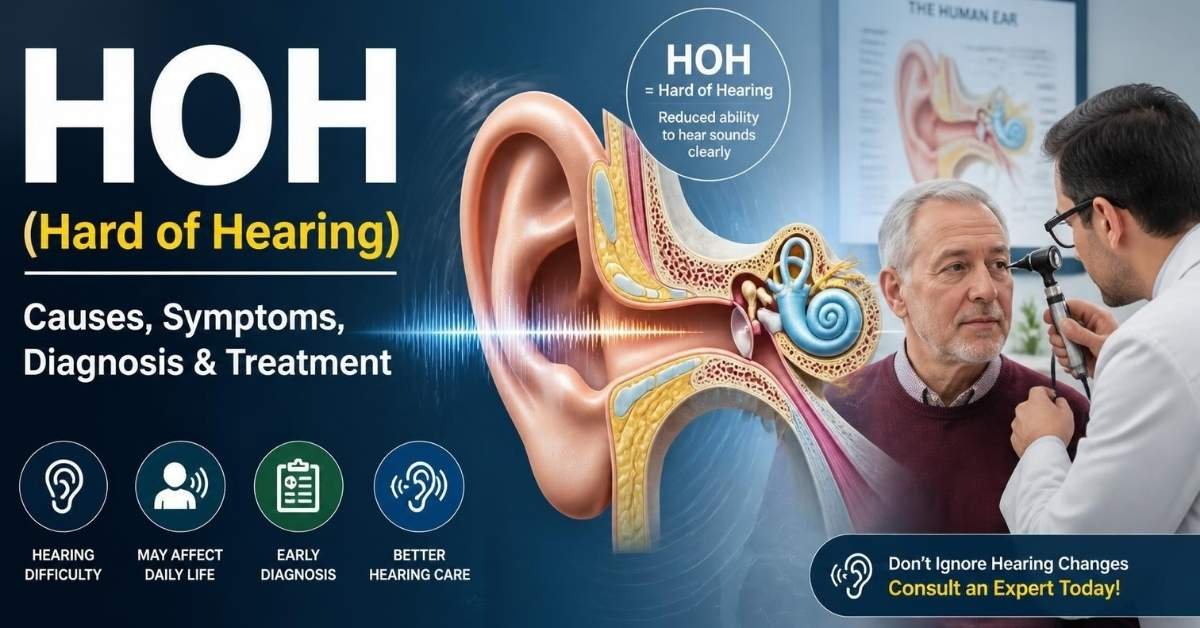
HOH in a medical setting almost always means Hard of Hearing, a term used to describe someone with reduced hearing ability that isn’t total hearing loss.
It’s different from being fully deaf, and it covers a wide range, from mild hearing loss to something closer to severe hearing loss.
Doctors jot it down in patient charts so every person on the care team knows to adjust how they communicate.
Think of it like a sticky note that says “talk to this patient a little differently,” except it lives inside the electronic health records system instead of on paper.
What Does HOH Mean in Medical Terms?
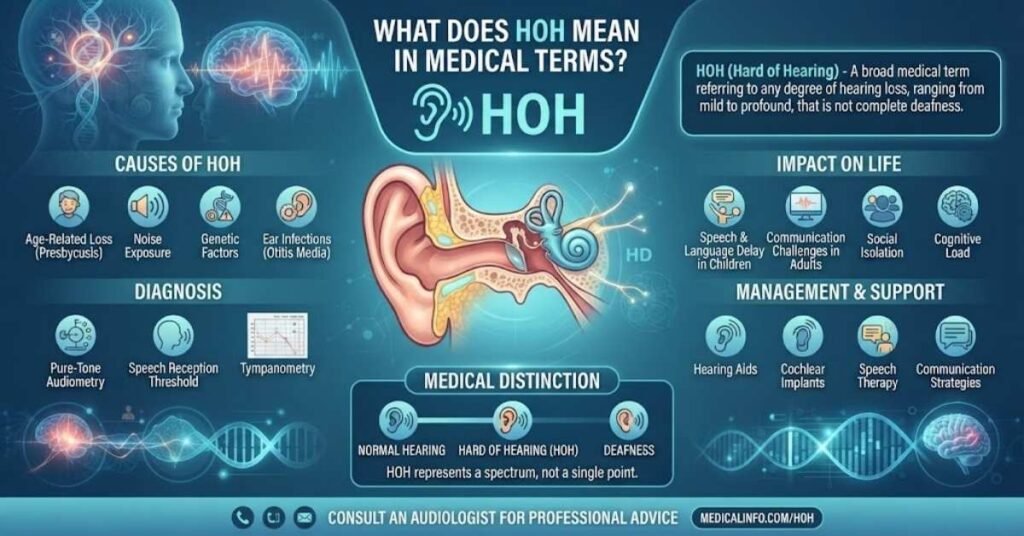
In clinical language, HOH medical meaning refers to a documented hearing status, not a formal diagnosis code.
Nurses and physicians add it to doctor’s notes, nursing assessments, or even discharge instructions so future providers don’t have to guess.
It’s shorthand, plain and simple, built for speed inside a busy hospital or clinic.
You’ll usually find it paired with other details, like whether the patient reads lips, uses hearing aids, or prefers written notes instead of spoken instructions.
That context matters, because HOH patient status isn’t one size fits all.
Someone with moderate hearing loss might do fine with a raised voice, while someone closer to profound hearing loss may need an interpreter or a captioned telehealth call.
What Does Hard of Hearing Mean?
Hard of hearing describes people who have some functional hearing left, even if it’s reduced.
They might catch parts of a conversation, especially in a quiet room, but struggle when there’s background noise or when several people talk at once.
Some folks with HOH grew up with the condition, others developed it slowly through age-related hearing loss, and some experienced a sudden hearing loss after an illness or injury.
Here’s the thing people often miss: hard of hearing isn’t a single fixed level.
It ranges from a mild dip in hearing to something that feels a lot closer to deafness, and where someone lands on that scale changes what kind of support actually helps.
HOH Versus Deaf
People mix these two up all the time, so let’s clear it up.
Hard of Hearing means a person has some usable hearing, even if it’s limited.
Deaf typically means little to no functional hearing, and many individuals within Deaf culture identify with sign language as their primary form of communication rather than spoken language.
The distinction matters for communication preferences too.
A HOH patient might rely on hearing aids, lip reading, or simply asking you to face them while speaking.
A Deaf patient may need a sign language interpreter for anything beyond a casual hello.
Neither group is “less than” the other, they just experience sound differently, and healthcare providers who understand that difference give better, safer care.
Why Healthcare Providers Document HOH
Ever wonder why a two letter abbreviation gets its own spot in your chart?
It comes down to patient safety.
Miscommunication in a hospital isn’t just awkward, it can lead to real medical errors, missed instructions, or a patient who nods along without understanding a word.
When a provider documents HOH, it triggers a chain reaction.
The front desk knows to face the patient when calling their name.
The nurse knows to write down medication instructions instead of just saying them.
The doctor knows to slow down and check for understanding before moving on.
That small note protects informed consent, supports better treatment decisions, and keeps the whole visit running smoother for everyone involved.
Where You May See HOH in Medical Records
You might spot HOH in more places than you’d expect.
It often shows up right at the top of a chart, near allergies or other alert flags, so it’s the first thing a provider notices.
You’ll also find it inside emergency department notes, especially when a patient arrives and staff need to adjust communication fast, sometimes in a chaotic, noisy room.
Other common spots include referral documents, appointment scheduling systems, and even the patient portal, where accessibility notes help future visits go smoother.
Some clinics list it under “patient accessibility notes,” which is really just a fancier label for the same idea, that this person needs a slightly different communication approach.
Common Communication Accommodations for HOH Patients
This is the part that actually affects real people in real waiting rooms.
Small changes here make a massive difference in comfort and safety.
Speaking Clearly
Speak at a normal pace, not painfully slow, and avoid shouting.
Shouting actually distorts sound and makes lip reading harder, so clear and steady works better than loud.
Facing the Patient
Face-to-face communication lets patients pick up on facial expressions and read lips if they need to.
Turning away to type notes while talking is one of the most common mistakes providers make.
Reducing Background Noise
Background noise reduction helps more than people realize.
Closing a door or stepping into a quieter room can turn a frustrating exchange into an easy one.
Written Instructions
Written instructions back up spoken words, especially for anything important like dosage or follow up dates.
A quick handwritten note or printed sheet removes the guesswork entirely.
Assistive Listening Devices
Assistive listening devices and sound amplification devices help patients catch spoken details clearly, especially during longer consultations.
Some clinics keep portable ones on hand just for this reason.
Qualified Interpreters
For patients who need more support, qualified interpreters or sign language interpreters ensure nothing gets lost, particularly during complex conversations about diagnosis or treatment.
Skipping this step, even with good intentions, can lead to serious misunderstandings.
Real Life Examples of HOH in Healthcare
Sometimes examples explain things faster than definitions ever could.
Example 1
An older adult patient comes in for an annual physical.
Her chart already lists HOH, so the nurse faces her directly and speaks a bit slower, no shouting required.
Example 2
A man arrives at the emergency department visit after a fall.
Staff notice his hearing aid and immediately mark HOH in his notes, then switch to short written instructions for anything urgent.
Example 3
Before surgery scheduling, a patient mentions she reads lips.
The surgical team confirms this in her file, ensuring pre-op instructions are given face to face instead of over a mask covered phone call.
Example 4
During a telehealth visit, a patient struggles to follow along.
The provider turns on telehealth captions, and suddenly the whole appointment feels less stressful for both sides.
Common Causes of Hearing Loss
Hearing changes rarely come out of nowhere, there’s usually a cause behind them.
Aging is one of the biggest factors, since age-related hearing changes naturally reduce sensitivity to certain sounds over time.
Loud noise exposure is another huge one, whether it’s years of factory work, concerts, or even everyday headphone use turned up too high.
Other causes include ear infections, genetic conditions, head injuries, and inner ear disorders that affect how sound signals travel to the brain.
Certain chronic health conditions and even certain medications can quietly chip away at hearing without anyone noticing right away.
Watch for warning signs like ear drainage, ear pain, ringing in the ear, or unexplained dizziness, since these often point toward an underlying issue worth checking.
When Someone Should Seek Medical Evaluation
If conversations start feeling like guessing games, that’s usually a sign to get checked.
A proper hearing test or full audiology evaluation gives a clear picture of what’s actually happening, rather than just assuming it’s “just getting older.”
An audiologist or hearing specialist can pinpoint the type and degree of loss, then walk through treatment options that actually fit the situation.
Early evaluation matters more than people think.
Catching hearing loss early often means simpler treatment and fewer complications down the road, while waiting too long can make adjustment harder later.
Other Possible Meanings of HOH
Context is everything with abbreviations, and HOH isn’t exclusive to healthcare.
Outside of medical settings, HOH frequently stands for Head of Household, a term used in tax documents, insurance documents, and government forms.
Some organizational abbreviations or internal systems might use HOH for something entirely unrelated to hearing or households too.
That’s why context based abbreviation meanings matter so much, the same two letters can mean something completely different depending on where you spot them.
Always check the surrounding document type before assuming which meaning applies.
Common Mistakes People Make With HOH
A few mix ups happen again and again, so let’s clear them up here.
People often assume HOH automatically means someone is completely deaf, which isn’t accurate at all.
Others assume every HOH patient uses sign language, when many actually rely on speech reading, hearing aids, or simply asking for things to be repeated.
Providers sometimes forget to update the chart after a patient gets cochlear implants or improves with treatment, leaving outdated information sitting in the record.
And some staff talk louder instead of clearer, which, as mentioned earlier, usually backfires and makes things harder to understand instead of easier.
Conclusion
So there you have it, HOH simply means Hard of Hearing when you spot it inside a medical chart.It’s a small note with a big job, making sure communication stays clear, safe, and respectful for patients who need a slightly different approach.Whether it’s through written instructions, assistive listening devices, or a qualified interpreter, small adjustments protect both patient safety and peace of mind.
Next time you see HOH on a form, you’ll know exactly what it means and why it’s there.Got questions about your own chart or a loved one’s? Drop them in the comments, we’re happy to help clear things up.
FAQs
What does HOH mean in medical records?
It stands for Hard of Hearing, a note that flags reduced hearing ability so providers can adjust communication.
Is HOH the same as being deaf?
No, HOH usually means some functional hearing remains, while deaf often means little to no usable hearing.
Why do hospitals note HOH?
Hospitals document it to prevent communication errors and support safer, clearer patient care.
Can someone who is HOH use hearing aids?
Yes, many HOH patients use hearing aids or other hearing support devices to improve daily communication.
Does HOH always mean Hard of Hearing?
Not always, outside healthcare it can mean Head of Household or other things depending on the document.
Is HOH considered a medical diagnosis?
Not exactly, it’s more of a documented status than an official diagnosis code.