
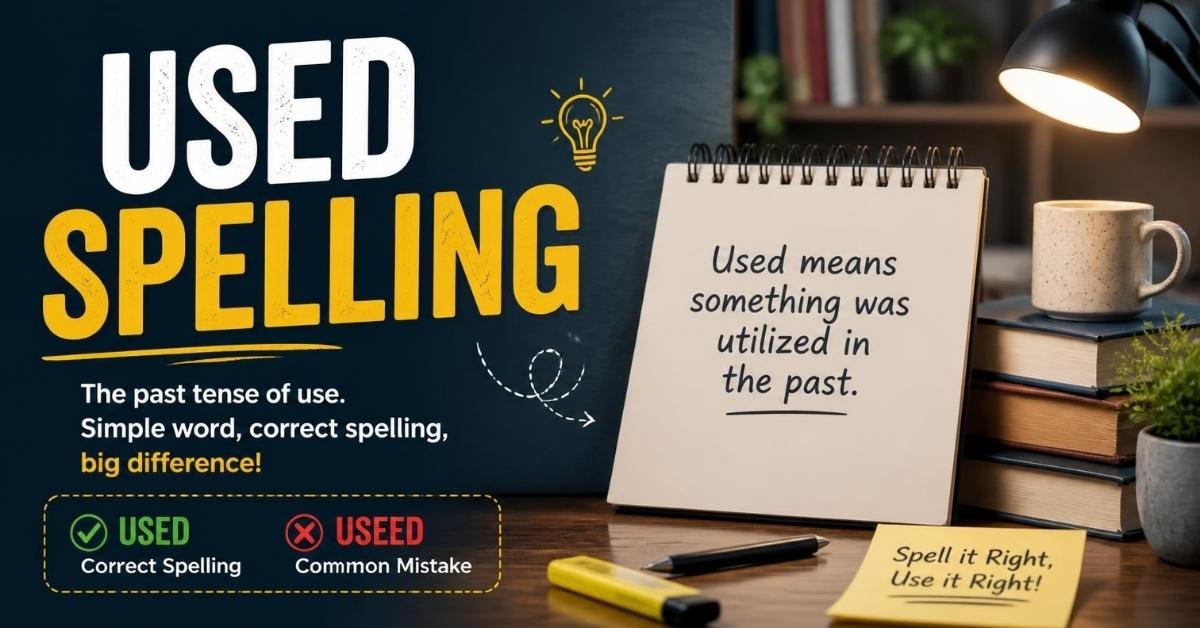
Used or Use: Which One Is Correct and When to Choose Each
You typed a sentence. Then you stopped. “Wait, is it used or use here?”You’re not alone. This mix-up trips up English learners, students, and even native speakers on a rushed email. It’s one of the most common writing confusion points in everyday English.
Good news though. Once you see the pattern, you won’t second-guess it again. Let’s clear it up right now, then dig into the details.
Used or Use – Quick Answer

Here’s the short version. Use is the base form of the verb, and you use it for present tense or future action. Used is the past tense and also the past participle, so it points to a finished action or something that already happened.
Say “I use this app every morning” when it’s a current habit. Say “I used this app last year” when it’s over and done. That’s the whole rule in a nutshell.
There’s a twist too. “Used to” describes past habits that don’t happen anymore, like “I used to bike to work.” And “used” can also work as an adjective, like a used car, which just means it’s not new.
The Origin of Used or Use
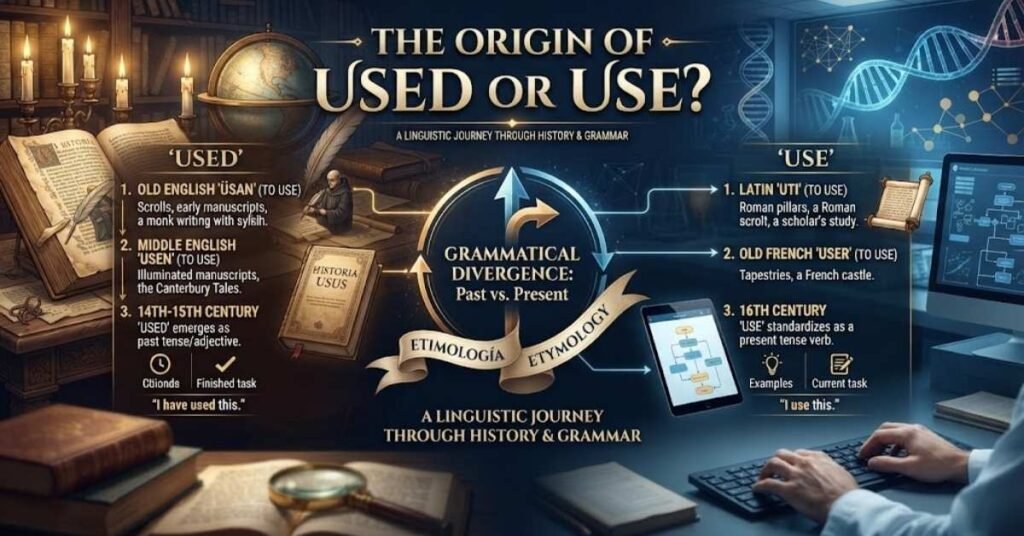
Words don’t fall out of the sky. This one has a real backstory that actually helps it stick in your memory.
The word traces back to the Latin word uti, which meant to employ or apply something for a purpose. From there it passed through Old French as “user,” picking up the meaning we still lean on today. By the time it reached Middle English, “use” had settled into the verb and noun form we recognize now.
That’s language history doing its quiet work in the background. Knowing the root doesn’t just satisfy curiosity. It explains why “use” always carries that sense of applying or making use of something, no matter which tense you pick.
British English vs American English Spelling
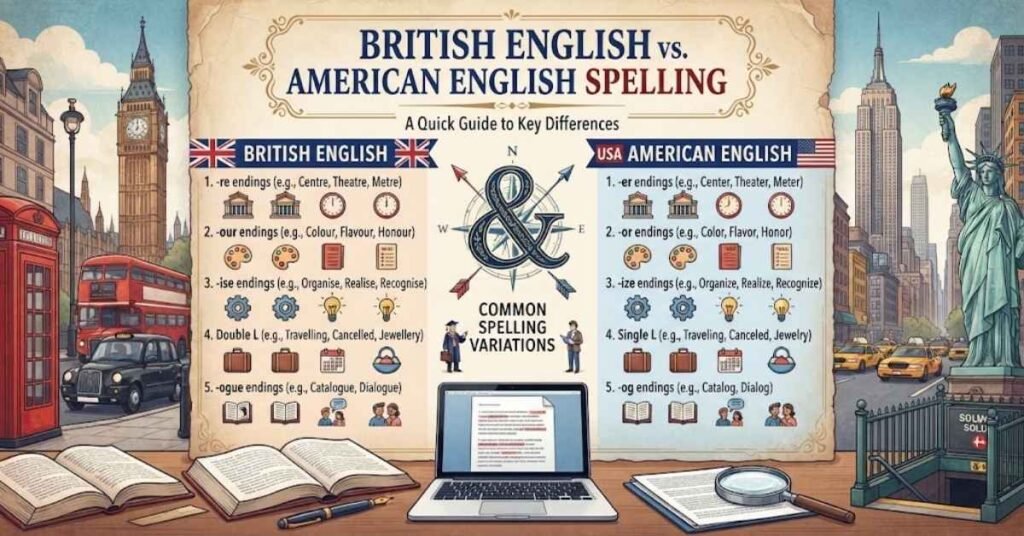
Here’s where people often panic for no reason. Relax, because “use” and “used” are spelled the same in both.
Unlike words such as “colour” versus “color,” this verb doesn’t split along British English and American English lines. Whether you’re writing for a UK English audience or US English readers, “use” and “used” stay identical. Even Commonwealth English and other pockets of global English follow the same spelling here.
So where do regions actually differ? Mostly in phrasing and preference, not spelling. British writers might lean on “make use of” a touch more formally, while American writers often just say “use it,” but the word itself never changes shape.
Which Spelling Should You Use?
Since spelling isn’t the issue, the real question is timing. Ask yourself one thing before you type: is this happening now, or did it already happen?
If it’s current action, reach for “use.” If it’s previous action or something wrapped up, reach for “used.” That single question solves most of the confusion on the spot.
Think about subject-verb usage too, since that shapes which form fits. “She uses her phone constantly” needs that extra “s” for third person singular. “They used their phone yesterday” doesn’t need any extra tweak, because “used” stays the same across all subjects.
Common Mistakes with Used or Use
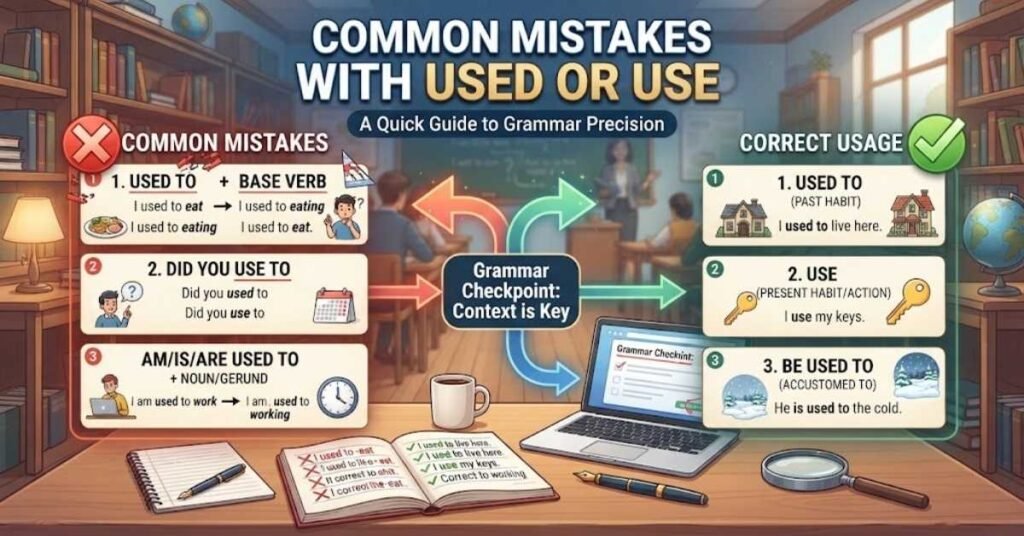
Even sharp writers slip here, especially under deadline pressure. Let’s look at the errors that show up again and again.
One frequent slip is writing “I use to walk here” instead of “I used to walk here.” That missing “d” changes a past habit phrase into something that just sounds wrong. Another common one is dropping the “d” in passive constructions, like saying “This tool is use for editing” when it should be “This tool is used for editing.”
- Error correction tip: read the sentence out loud, since your ear often catches what your eyes miss
- Watch for auxiliary verbs like “is,” “was,” or “has” right before the word, because they almost always call for “used,” not “use”
- Double check tense agreement across the whole sentence, not just the one word
These aren’t just grammar nitpicks. In formal writing, academic writing, or a job application, this kind of slip can make a reader question your attention to detail.
Used or Use in Everyday Examples
Theory is fine, but examples make it click. Picture explaining this to a friend over coffee, not a textbook.
For present or ongoing situations:
- “I use my laptop for school work every day.”
- “She uses apps to track her spending.”
- “We use this method for every project.”
For past or finished situations:
- “He used a hammer to fix the shelf.”
- “They used that old tool until it broke.”
- “I used your suggestion in my report.”
Notice how naturally these fit into everyday writing, emails, and even casual social media writing. The pattern doesn’t change whether you’re drafting instructions, a report, or a quick text to a friend.
Used or Use – Google Trends & Usage Data
Curious minds want proof, not just claims. So let’s look at what search data actually shows.
Google Trends consistently shows “used” and “use” among the most searched grammar comparisons in English-speaking countries. This tells us something important about search intent. People aren’t just curious about definitions, they’re actively trying to fix real writing mistakes in real time, often mid-email or mid-assignment.
Search patterns spike around back-to-school seasons and hiring periods too. That lines up with students polishing papers and job seekers cleaning up applications. It’s proof that keyword variations around this topic reflect a genuine, ongoing need, not just a passing trend.
Comparison Table: Keyword Variations
Sometimes a quick visual clears things up faster than paragraphs ever could.
| Form | Type | Example | Meaning |
| Use | Base form / present tense | “I use this daily.” | Current action |
| Used | Past tense | “I used this yesterday.” | Finished process |
| Used | Past participle | “It has been used.” | Completed, with auxiliary verb |
| Used to | Past habit phrase | “I used to jog.” | Past habits, not current |
| Used | Adjective | “A used car.” | Condition description, not new |
| Uses | Third person present | “She uses it often.” | Present usage, singular subject |
Keep this table bookmarked. It covers nearly every situation you’ll run into in daily use of this word.
Formal Writing vs Casual Writing: Does It Change Anything?
Good question, and one people don’t ask enough. Short answer: the grammar rule stays the same, but tone shifts.
In academic writing or a professional report, you’ll often see “utilize” or “employ” swapped in for variety. That’s stylistic, not grammatical, since “utilize” doesn’t actually outrank “use” in clarity, it just sounds fancier. In casual writing, from texts to social captions, “use” and “used” stay simple and direct, which is honestly the better choice most of the time.
Here’s a personal example. A friend once rewrote her entire resume replacing every “used” with “utilized,” thinking it sounded more impressive. It didn’t land well in the interview, because plain, confident language usually beats overdressed vocabulary in professional writing.
How Technology and Tools Have Shaped Modern Usage
Language doesn’t sit still, especially with technology shaping how we write. Grammar checking tools and apps now catch tense errors instantly, which has quietly changed writing habits.
Autocorrect and grammar links built into email platforms flag “use” versus “used” errors before you even hit send. That’s shifted a lot of the burden of catching mistakes away from memorization and onto instant feedback. Still, understanding the actual rule matters, because tools sometimes miss context, especially with idioms or unusual sentence structures.
Think of it like spellcheck for a name. It can flag a typo, but it can’t tell you if you meant your uncle Tom or your coworker Tom. Grammar tools work the same way here, catching the obvious slips but missing subtler context.
Why This Small Mistake Matters More Than You Think
It might feel like a tiny detail. But small errors add up fast in how readers judge your writing.
In news writing, one wrong tense can shift the entire meaning of an event, making something sound ongoing when it’s actually over. In a job application, sloppy tense use might signal carelessness to a hiring manager scanning dozens of resumes. Clear communication skills aren’t about sounding smart, they’re about making sure your reader gets exactly what you meant, the first time.
This connects directly to sentence accuracy and overall writing improvement. Fix this one pattern, and you’ll notice your writing tightening up elsewhere too. It’s one of those small grammar rules that quietly signals bigger writing confidence.
Conclusion
So here’s where we land. Use belongs to now or the future, and used belongs to what already happened. Everything else, from used to phrases to the used car adjective, branches out from that one core idea.You don’t need to memorize a textbook to get this right. Just ask “is this happening now, or already done,” and let that guide your word choice.
Practice it a few times in your own daily use, and it’ll stop feeling like a puzzle.Got a sentence you’re unsure about? Drop it in the comments and let’s sort it out together. And if this cleared things up for you, share it with someone who could use the tip too.
FAQs
Is it “I use to” or “I used to”?
It’s always “used to” when talking about a past habit that’s no longer true, like “I used to run marathons.”
Can “used” and “use” both be correct in the same sentence?
Yes, absolutely. For example, “I used to use this method, but I don’t anymore” uses both correctly in different roles.
Why does “used” sometimes sound like “yoost” instead of “yoozd”?
That happens in the “used to” phrase specifically, where pronunciation softens, but the spelling never changes.
Is “used” only for the past, or can it describe things too?
Both. It’s the past tense of the verb, but it also works as an adjective, like describing a used car or used furniture.
Do British and American English spell these words differently?
No. Unlike many other word pairs, “use” and “used” are spelled identically across British English, American English, and other English-speaking regions.