Potato vs Potatoe: Which Spelling Is Right? (guide 2026)
Ever typed “potatoe” and watched your spellcheck light up red? Or paused halfway through a recipe and wondered if that extra “e” really belongs there?Here’s the short answer. The correct spelling is potato, with no “e” at the end. Potatoe is an incorrect spelling, and only the plural form, potatoes, takes the “-es” ending.
Stick around and you’ll learn why this spelling mistake happens so often, where the word comes from, and how to lock in the right version for good.
Potato or Potatoe – Quick Answer
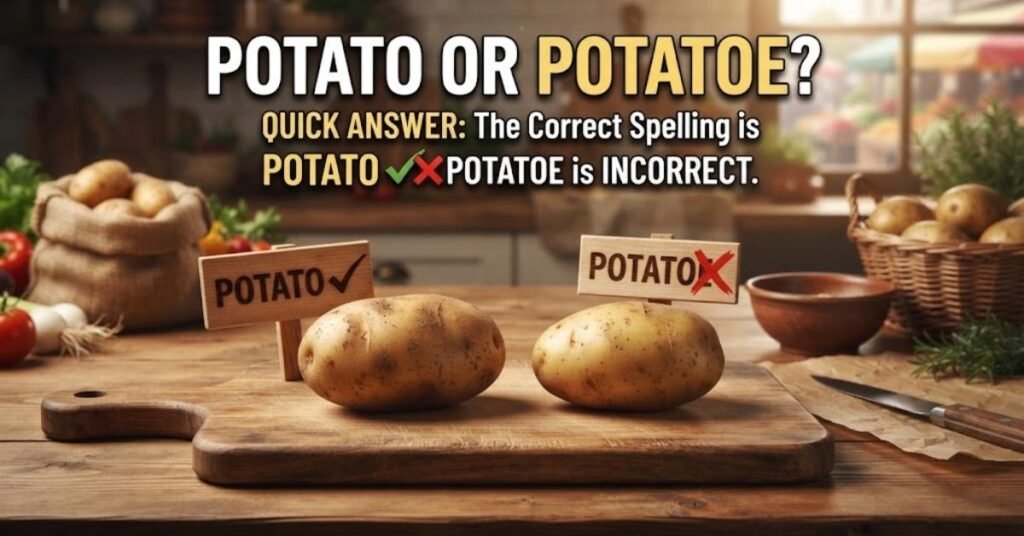
Short on time? Here’s the deal. Potato is the standard spelling form in Standard English, whether you’re writing a recipe blog, a school report or a work email.
The singular form ends in “o”. The plural form ends in “-es”. That one tiny difference causes most of the language confusion around this common word.
Keep this cheat sheet handy:
- One: potato
- More than one: potatoes
- Never: potatoe
The Origin of Potato or Potatoe
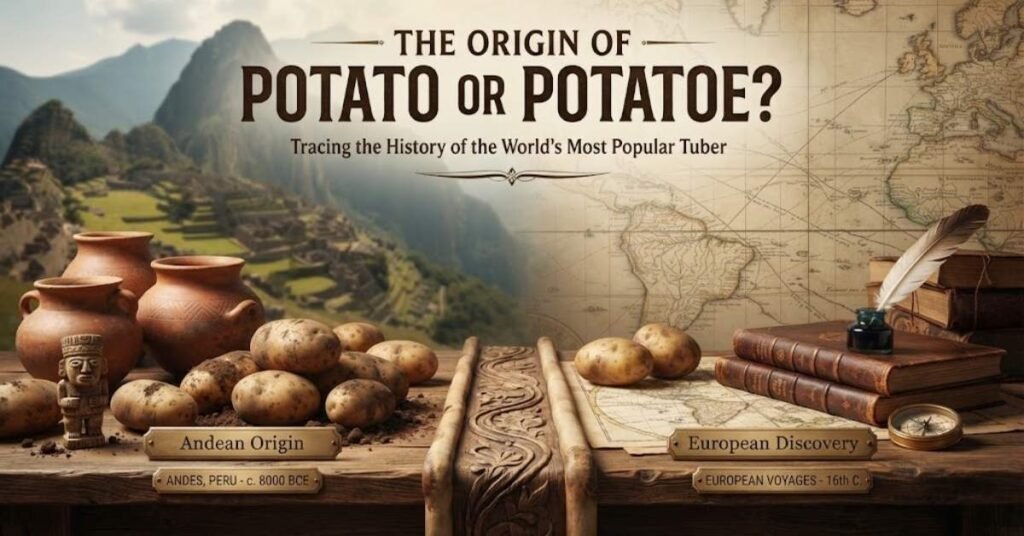
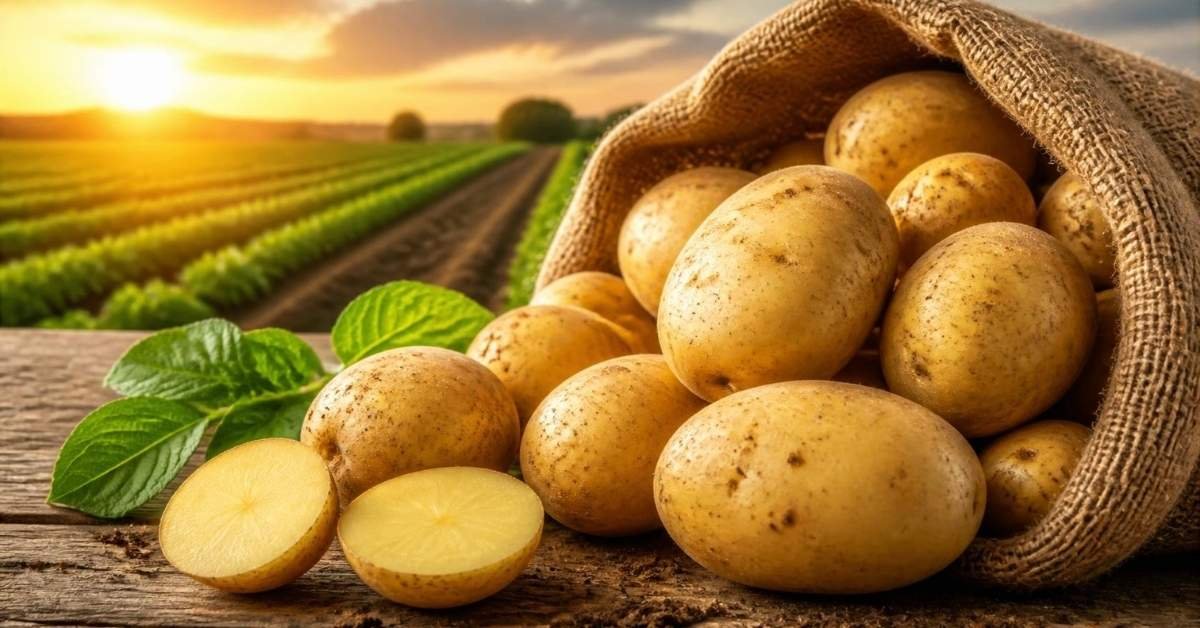
The word origin takes us back to the 1500s. Spanish explorers carried the crop from South America to Europe, and the Spanish word patata traveled right along with it.
Etymology sources usually trace patata to “batata,” a Taino word for sweet potato, blended with “papa,” the Quechua name for the plant. English borrowed the word and shaped it into potato.
Back then, English spelling hadn’t settled down yet. You can still spot “potatoe” in some old printed material, but dictionary editors eventually locked in potato as the standard.
British English vs American English Spelling
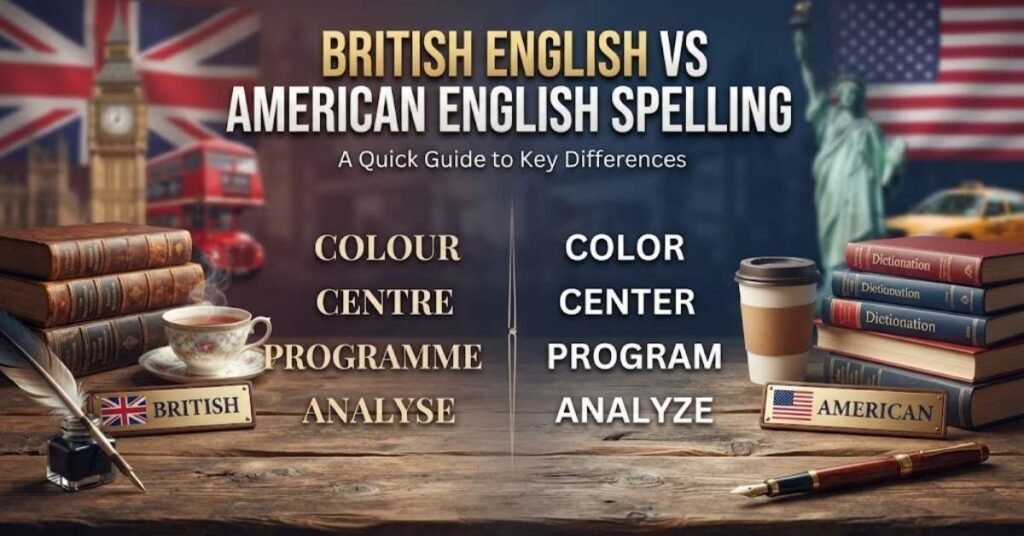
Good news: there’s no split here. British English, American English, UK English and US English all spell it potato. You won’t need to switch spellings for different readers.
That makes it different from pairs like “colour” and “color.” Global English treats this word the same way everywhere, so one spelling covers your whole audience.
What does change is the food vocabulary. A Brit orders a “jacket potato” with a side of “chips,” while an American asks for a baked potato and “fries.” Same starchy vegetable, different menu talk.
Which Spelling Should You Use?
Use potato every single time you mean one. Use potatoes when you mean more than one. That holds true from a quick note to a research paper.
Here’s where it applies:
- Formal writing and academic writing, like reports and essays
- Professional writing, such as emails, proposals and product pages
- Casual writing, including social media and social posts
- Recipe instructions, menu cards and grocery lists
Even in a casual text, the right spelling makes you look sharp. Professional writing standards don’t bend for spuds, and readers do notice.
Nouns Ending in “o”: Why Potatoes Get an “-es”
So why does potatoes carry that extra “e”? It follows a pattern you’ll see in some nouns ending in “o”. Think tomatoes and heroes. They take an “-es” ending to become plural nouns.
But English loves its exceptions. Words like photos, pianos and radios just take an “-s”. There’s no perfect spelling rule or grammar rule here, so it’s partly a memory game.
Here’s a quick lineup:
- Take “-es”: potatoes, tomatoes, heroes, echoes, vetoes
- Take “-s”: photos, pianos, radios, videos
- Take either: zeros or zeroes, volcanoes or volcanos
Since potato is a countable noun, you’ll meet its plural all the time. Bags of potatoes, boiled potatoes, potatoes on sale. That constant “-es” is exactly what trips people up on the singular.
Common Mistakes with Potato or Potatoe
Most writing errors with this word fall into a few buckets. Spot them once and you’ll fix them fast.
- Adding an “e” to the singular noun: “a potatoe”
- Dropping the “e” from the plural: “potatos”
- Mixing both in one document, like “potato salad” next to “potatoe soup”
- Trusting autocorrect without a second look
One mistake is famous. In 1992, then US Vice President Dan Quayle visited a school spelling bee in New Jersey and told a student to add an “e” to “potato.” The student had it right, and the moment became a lasting joke.
The lesson? Even smart, busy people trip on this one, so don’t beat yourself up. Still, unprofessional writing gets noticed, especially on a menu or a website.
Potato or Potatoe in Everyday Examples
Seeing the word in real sentences helps it stick. Here are a few from daily life, with the right spelling in bold.
- Recipe instructions: “Peel the potato and slice it into thin rounds.”
- Potato recipe title: “Creamy boiled potatoes with fresh herbs”
- Soup menu: “Leek and potato soup with crusty bread”
- Dinner plan: “Roast the fresh potato wedges with an onion.”
- School work: “Our school garden grew forty potatoes this year.”
- Farmers’ reports: “Potato prices dipped after a strong harvest.”
- Online comments: “That potato dish looks amazing!”
Now try the wrong versions: “a potatoe dish” and “boiled potatoe with onion.” Both look off, right? That’s your eye telling you something’s wrong.
In news writing, reporters treat potato as a staple crop and a staple food that feeds millions, a true country food source. They spell it the same way every time, and so should you.
Potato or Potatoe – Google Trends & Usage Data
Let’s talk search data honestly. We won’t toss out made-up numbers, because Google Trends shows relative interest on a 0 to 100 scale, not raw search volume.
You can check it yourself in about a minute. Open Google Trends, compare “potato” and “potatoe,” pick your country and set a date range. You’ll almost certainly see the correct spelling tower over the other one.
Usage in the wild looks just as lopsided. Every dictionary, news site and set of trusted websites uses potato. When the sources your readers trust all agree, following them is the safest move.
Comparison Table: Potato vs Potatoe
Sometimes a side by side view says it best. This spelling comparison shows which form is safe and which one isn’t.
| Feature | Potato | Potatoe |
| Status | Correct spelling | Incorrect word form |
| Singular use | Yes | No |
| Plural form | Potatoes | Not used |
| UK and US English | Accepted in both | Not accepted in either |
| Dictionary standing | Standard entry | Not a standard entry |
| Safe for formal writing | Yes | No |
| Example | “One baked potato, please.” | “One baked potatoe, please.” |
The takeaway is simple. Only one column is safe, so pick potato for the singular and potatoes for the plural.
Easy Tricks to Remember the Right Spelling
Picture a home cook posting a potato recipe at midnight, tired and typing fast. A few simple habits can save that post from a typo.
- Think crowd: extra letters for extra potatoes. The “e” only joins the party when there’s more than one.
- Spell it out: say P-O-T-A-T-O letter by letter once. Six letters, and it ends in “o.”
- Pair it up: learn tomato and tomatoes together, since they follow the same pattern.
- Check on your phone: with mobile typing, autocorrect can swap or miss letters, so reread before you hit post.
Habits beat memorizing rules. After a week of using the crowd trick, you’ll stop thinking about it.
Why This Spelling Confusion Sticks
Part of the problem is exposure. We see “potatoes” on grocery signs, in cookbooks and in recipe instructions far more often than the singular. That pattern nudges people to attach the “e” everywhere.
Sound plays a role too. The potato pronunciation confusion is real, and the long “ay” in the middle makes the word feel bigger than it looks on paper. A famous old song, “Let’s Call the Whole Thing Off,” even turned different ways of saying the word into a joke. That’s about sound, not letters.
Add the “-es” pattern from tomatoes and heroes, and the spelling confusion makes sense. It’s a reasonable guess that just happens to be wrong. That’s why confusing spellings like this one deserve a quick refresher now and then.
Why It Matters for Recipe Blogs, Menus and Websites
A spelling mistake on a menu or recipe blog can make readers wonder what else you got wrong. Trust builds slowly and slips quickly. Clear communication starts with writing accuracy.
For online pages, correct word choice also helps search engines and readers understand what you’re offering. Consistent spelling in a title like “Boiled potatoes with garlic butter” keeps everything clean and easy to find.
It matters for language learning too. Anyone building their English vocabulary leans on trusted written communication as a model. If your page teaches the wrong word usage, it teaches it to everyone who reads it.
Conclusion
The correct usage is simple. Potato is the singular, potatoes is the plural, and potatoe isn’t a real spelling in British English, American English or any other standard form.Remember the crowd trick, check your menu and recipe titles, and reread anything you write on your phone.
Small habits protect your writing accuracy and keep your everyday language polished.Which spelling trap have you fallen into? Drop it in the comments, and share this with a friend who writes recipes or menus.
FAQs
Is it potato or potatoe?
The correct spelling is potato. Potatoe is a common spelling mistake and isn’t accepted in Standard English.
What is the plural of potato?
The plural is potatoes, with an “-es” ending. The same rule applies to tomatoes and heroes.
Is potatoe ever correct in British English or American English?
No. Both UK English and US English use potato. You may spot “potatoe” in very old texts, but it isn’t standard today.
Why do potatoes have an “e” but potato doesn’t?
English adds “-es” to some nouns ending in “o” when they turn plural. It’s a pattern, not a strict rule, so it’s best learned as part of the word.
Does Google penalize a page for spelling potatoe?
There’s no rule that one typo will sink a page. But Google’s guidance stresses quality and trust, and sloppy spelling chips away at both.