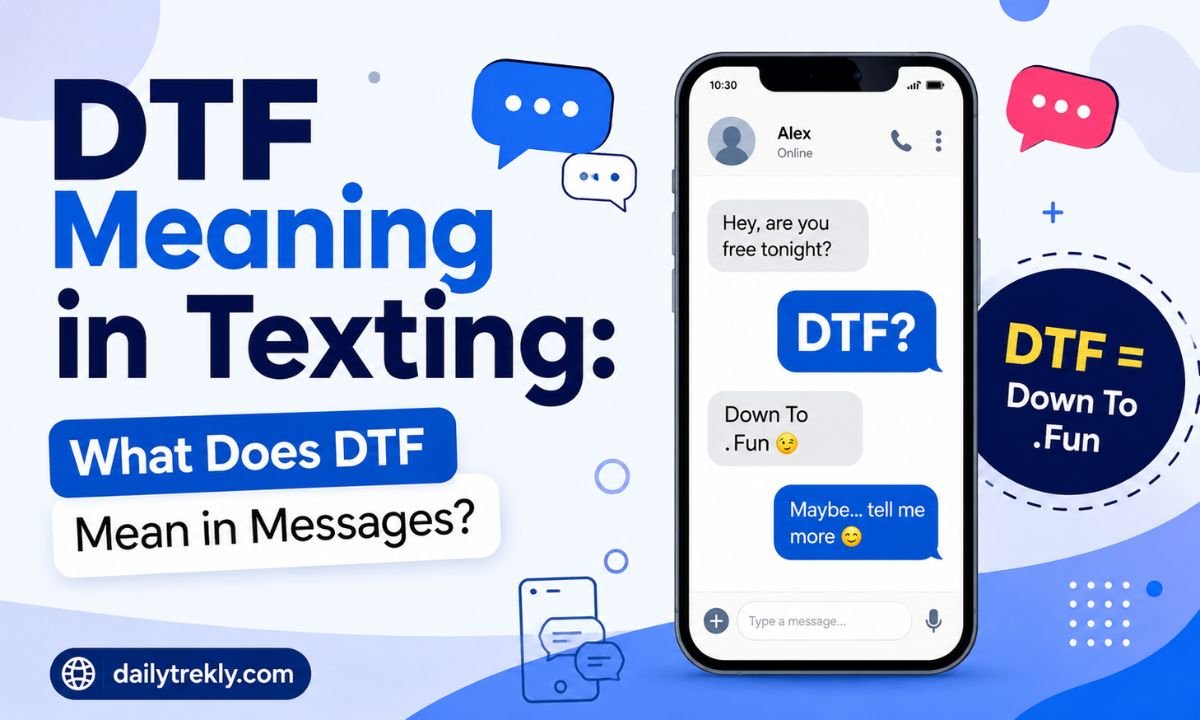
DTF Meaning in Texting: What Does DTF Mean in Messages?
If you have ever received a text that just says “DTF?” and felt a mix of confusion and curiosity, you are not alone. DTF meaning in texting is one of the most searched slang questions online, and for good reason: the term is short, blunt, and easy to misread if you do not know the context.
This guide breaks down the DTF meaning in texting in plain language. You will learn where the term came from, how people use it today, when it can be rude, and exactly how to respond if someone sends it to you.
What Does DTF Mean in Texting?
The DTF meaning in texting is almost always tied to sexual availability. When someone types “DTF” in a message, they are typically asking or stating whether they (or the person they are messaging) are open to a casual physical encounter.
DTF is an acronym, not a full word, which is why it shows up so often in fast-paced digital conversations like texting, dating apps, and social media comments.
Simple Definition
DTF stands for “Down To F*,” a slang phrase that signals someone is willing or interested in a casual sexual encounter.** That is the core DTF meaning in texting across nearly every modern context, from Tinder bios to late-night group chats.
The phrase “down to” simply means willing or ready, as in “I’m down to grab food.” In DTF, that same structure gets applied to a much more direct and adult subject.
The Origin and History of DTF
The DTF meaning in texting did not appear overnight. Like most slang, it evolved gradually before becoming a fixture of digital conversation.
Early Usage
The DTF meaning in texting has roots in American nightlife and party culture, where short, blunt phrases were used to communicate interest quickly in loud bars and clubs. Long before smartphones, people used similar shorthand in face-to-face conversation, and texting later carried that same bluntness into written form.
Rise in Pop Culture
DTF became mainstream slang in the late 2000s and early 2010s, largely through MTV’s reality show Jersey Shore, where cast members used the phrase frequently to describe hookups. The show’s popularity pushed the acronym far beyond its original social circles and into everyday texting and internet culture.
Dating apps like Tinder, and earlier platforms like MySpace and AOL Instant Messenger, also helped normalize shorthand phrases for expressing interest, which reinforced the DTF meaning in texting that most people recognize today.
Why It Stuck
The DTF meaning in texting stuck around because it does three things slang needs to do well:
- It is short and fast to type
- It gets straight to the point without a long explanation
- It carries a recognizable tone that most people over a certain age instantly understand
That combination of speed and clarity is exactly why the DTF meaning in texting has remained consistent for more than a decade, even as other slang terms come and go.
DTF Meaning in Relationship
Inside a relationship or a budding romantic connection, the DTF meaning in texting usually signals a desire for something physical and low commitment rather than a serious emotional bond. It is more commonly used between people who are casually dating, flirting, or exploring a hookup than between long-term, committed partners.
That said, some couples use DTF playfully with each other as inside slang once trust and physical intimacy are already established. In that setting, the DTF meaning in texting shifts from a proposition to a lighthearted, familiar shorthand between two people who already know each other’s boundaries.
How DTF Is Commonly Used in Texting
The DTF meaning in texting stays fairly consistent, but where and how it appears can change the tone of the message. Here are the three most common settings.
1. On Dating Apps
This is where the DTF meaning in texting is most direct. People use it in bios, opening messages, or later in a conversation to gauge whether both sides are looking for something casual before investing more time.
2. In Flirting or Casual Chats
Among friends or new romantic interests, DTF can appear as a flirty question rather than a blunt demand. The tone is usually softened by emojis, punctuation, or surrounding conversation, but the underlying DTF meaning in texting stays sexual.
3. In Memes and Internet Humor
Not every use is serious. DTF frequently shows up in memes about food, naps, or everyday cravings, such as “DTF (down to fries).” In these cases, the DTF meaning in texting is deliberately joked about rather than meant literally.
Alternative Meanings of DTF (Context Matters)
While the dominant DTF meaning in texting is sexual, the same three letters exist in other industries and communities with completely different meanings.
Common Alternative Meanings
| Alternative Meaning | Where It’s Used |
| Direct-to-Film (printing) | Textile and garment printing industry |
| Drug Task Force | Law enforcement and news reports |
| Down To Fight | Gaming chats and competitive lobbies |
| Down To Food / Fries / Fun | Playful texts among friends |
| Digital Tape Format | Older data storage technology |
In everyday texting and social media, the sexual meaning is overwhelmingly the default interpretation of DTF, unless the surrounding context clearly points to something else, like gaming or printing. This is exactly why context matters so much when decoding any message that includes the acronym.
DTF in Dating Culture: What It Signals
Within modern dating culture, the DTF meaning in texting communicates a specific type of intent rather than a general greeting.
What It Often Communicates
- Interest in a casual, low-commitment physical connection
- A desire to skip lengthy small talk and be direct
- Openness to meeting up without necessarily wanting a relationship
What It Usually Does NOT Mean
- It does not usually signal interest in a serious, long-term relationship
- It does not mean the person is disrespecting you by asking; it simply reflects their intent
- It does not guarantee follow-through, since some people use it to test interest without committing to anything
Is DTF Considered Rude or Offensive?
Whether the DTF meaning in texting feels appropriate or offensive depends heavily on the relationship between the two people texting and the setting in which it is used.
When It Can Be Offensive
- When sent to someone who has not expressed any romantic or sexual interest
- When used in a professional, family, or public setting
- When sent as an opening message to a stranger with no prior conversation
- When it ignores clear signals that the other person is not interested
When It May Be Acceptable
- Between consenting adults who already have a flirtatious or established connection
- On dating apps built around casual encounters, where directness is expected
- As a joking, non-literal reference among close friends who understand the context
How to Respond If Someone Texts You “DTF?”
Because the DTF meaning in texting is direct, your response should be just as clear. Here is how to handle it based on how you feel.
If You’re Interested
Be honest and direct back. A simple, confident reply like “Yeah, I’m down, what did you have in mind?” keeps the conversation moving without confusion.
If You’re Not Interested
You do not owe a long explanation. A polite but firm response such as “Not really my thing, but thanks for asking” closes the door respectfully.
If You’re Unsure or Want Clarity
It is completely fair to ask what they mean before responding. Something like “What exactly are you asking?” forces clarity and removes any guesswork around the DTF meaning in texting in that specific conversation.
If You’re Offended
You can say so directly. A message like “That’s not okay to send me” sets a boundary, and you are always free to end the conversation or block the sender if it continues.
Common Misunderstandings About DTF
Even though the DTF meaning in texting is widely known, several myths persist around how the term actually works.
Misconception 1: Everyone Is Comfortable With It
Not everyone finds the DTF meaning in texting playful or acceptable. Sending DTF to someone without an established rapport is one of the most common reasons the message gets read as disrespectful rather than flirty. Comfort with the term varies a lot by age, culture, and personal boundaries.
Misconception 2: DTF Always Means a Hookup
While the DTF meaning in texting is rooted in sexual availability, it does not always lead to an actual meetup. Many people use it to test interest or as internet humor without any real intention behind it.
Misconception 3: It’s Just a Joke
Even when used jokingly, DTF still carries its original sexual meaning underneath the humor. Assuming it is always harmless can lead to real misunderstandings, especially with people who are unfamiliar with the joke format.
Related Slang and Acronyms You Might See
The DTF meaning in texting often appears alongside other short, casual-dating acronyms. Recognizing them together makes modern texting slang much easier to decode.
READ MORE: ISG Meaning in Text: What It Means in Messages, Chat, and Social Media
Common Related Terms
- NSA – No Strings Attached, describing a relationship with no emotional commitment
- FWB – Friends With Benefits, a casual physical relationship between friends
- HMU – Hit Me Up, an invitation to reach out or reconnect
- WYD – What You Doing, often used as a casual check-in or opener
- Netflix and chill – A euphemism for a casual hookup disguised as a low-key hangout
When You Should Avoid Using DTF
Even with a clear DTF meaning in texting, there are situations where sending it is a bad idea.
Avoid Using DTF:
- With coworkers, classmates, or anyone in a professional setting
- With someone you have never spoken to before
- With people significantly younger than you, or where the recipient’s comfort is unclear
- In group chats where the message could be screenshotted or shared without consent
- When you have not read any signals suggesting mutual interest
DTF vs. More Polite Alternatives
If your goal is to express interest without the bluntness tied to the DTF meaning in texting, softer phrasing usually lands better and reduces the risk of an awkward or offensive reply.
Polite or Neutral Alternatives
| Instead of “DTF?” | Try This |
| “DTF tonight?” | “Want to hang out and see where things go?” |
| “You DTF?” | “I’m really into you, want to grab a drink?” |
| “DTF this weekend?” | “Free this weekend? I’d love to see you.” |
Why Understanding Texting Slang Like DTF Matters
Knowing the DTF meaning in texting is not just about staying current with internet culture. It directly affects how confidently you communicate, date, and set boundaries online.
Benefits of Understanding Slang
- You avoid replying awkwardly to a message you misread
- You can set clear boundaries the moment something feels inappropriate
- You communicate more confidently on dating apps and in casual chats
- You stay informed if you are a parent monitoring a teen’s online conversations
Conclusion
At its core, the DTF meaning in texting refers to sexual availability, most often shortened from “Down To F***.” The term became mainstream through reality TV and dating app culture, and today it shows up everywhere from flirty texts to internet memes.
Context is everything. The same three letters can be a direct proposition, a joke about food, or an industry term in printing or gaming, so reading the full conversation matters more than the acronym itself. Whether you are trying to understand a message you received, decide how to respond, or simply keep up with modern texting slang, knowing the true DTF meaning in texting helps you communicate with more confidence and fewer awkward misunderstandings.