
Leafs or Leaves: Which Is Correct and When to Use It?
You typed a sentence about autumn, saw the word on your screen, and paused.Is it “leafs” or “leaves”? Your fingers froze over the keyboard for a second, and honestly, that happens to more people than you’d think.
This mix up trips up students writing essays, professionals drafting emails, and even native speakers scrolling through social media. So let’s clear it up right now, in plain and simple terms, without dragging you through a boring grammar lecture.
Leafs or Leaves – Quick Answer
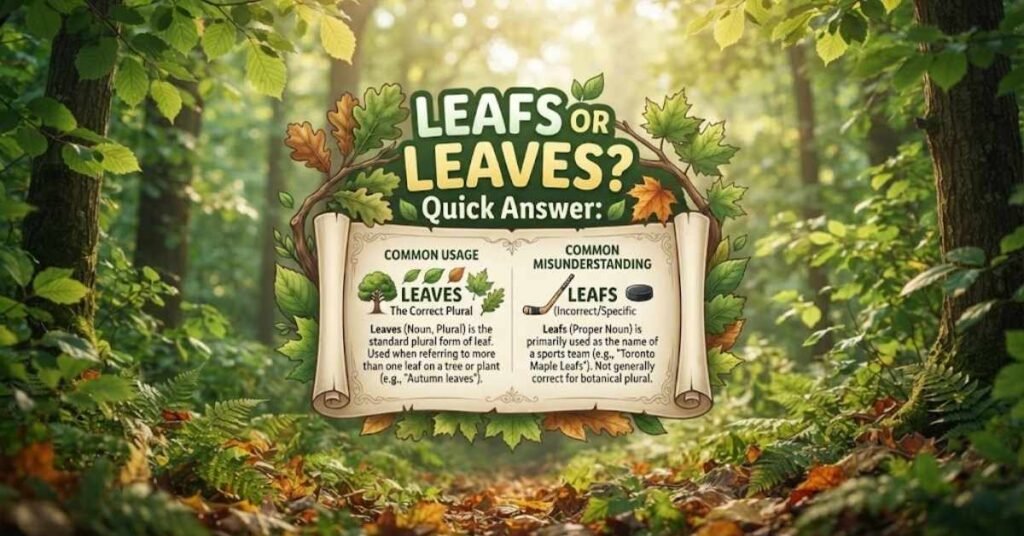
Here’s the short version. Leaves is the correct plural form of the word leaf in almost every normal situation. If you’re talking about plant leaves, tree leaves, or anything falling off a branch in October, you want “leaves.”
Leafs only shows up in two specific spots. One is the verb usage, like when someone leafs through a book or leafs through notes while flipping pages quickly. The other is a proper name, most famously the Toronto Maple Leafs, a hockey team that broke standard English grammar on purpose.
Outside of those two exceptions, “leafs” is simply wrong. Keep that quick answer in your back pocket, and you’re already ahead of most people typing this word every day.
The Origin of Leafs or Leaves
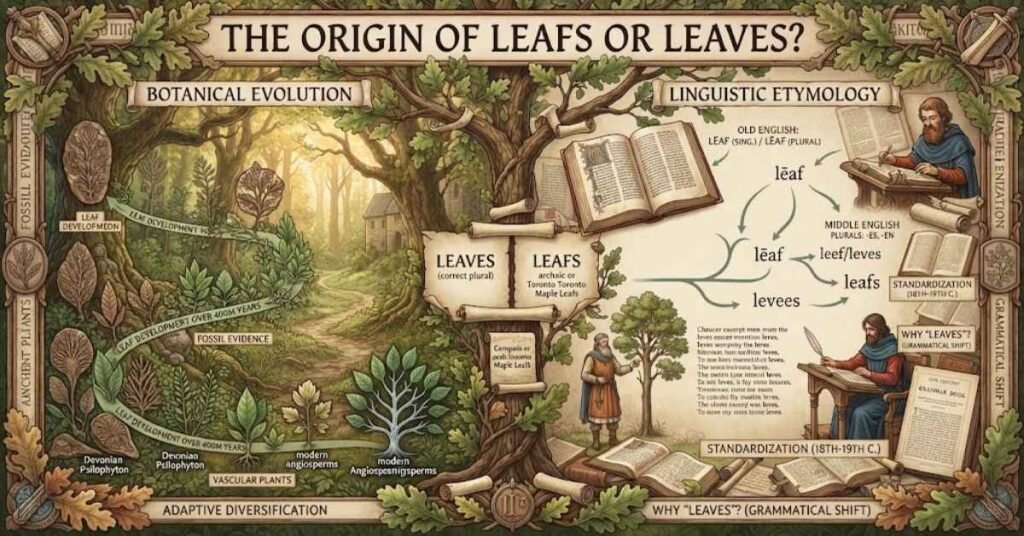
Words don’t just appear out of nowhere, and this one has a real backstory. The word “leaf” comes from Old English, specifically from lēaf, a term that Anglo Saxon speakers used centuries before smartphones existed.
Back then, English had a habit of changing certain ending sounds when a word moved from singular to plural. That habit is exactly why we don’t say “leafs” today, even though it might feel more natural to just add an “s” like we do with most nouns.
This shift wasn’t random either. It followed a sound pattern that stuck around in modern English, shaping how we pluralize a whole family of related words. Understanding this history makes the “leaves” spelling feel less like a random rule and more like a piece of English language evolution you can actually explain to someone else.
The f to v Spelling Change Explained
Here’s where things get genuinely interesting, and honestly kind of fun once you see the pattern. English has a group of words ending in “f” that swap that letter for a “v” before adding “es” in the plural.
This is called the f to v spelling change, sometimes written as the f → ves pattern. Leaf becomes leaves. It’s not an exception hiding in the shadows, it’s an actual rule that native speakers absorb without ever being taught the technical name for it.
You’ll spot this same pattern in other common words too. Think about knife → knives, wolf → wolves, and shelf → shelves. Once you notice the pattern once, you start seeing it everywhere, almost like learning a magic trick that was hiding in plain sight the whole time.
Not every “f” word follows this rule, which is honestly the annoying part of irregular plurals in English. Words like “roof” just add an “s” to become “roofs,” no letter swap involved. That’s why leaf trips people up so often. English loves exceptions, and this topic sits right in the middle of that chaos.
British English vs American English Spelling
People often assume British English and American English must handle this word differently, the way they handle “colour” versus “color.” Good news here, though. This is one spot where both sides of the ocean actually agree.
Whether you’re writing in London or in Los Angeles, leaves stays the correct plural. There’s no spelling variation or regional English twist waiting to confuse you here, unlike so many other words that split British and American writers apart.
So if you were hoping to blame a British English vs American English difference for your confusion, that excuse doesn’t hold up this time. Both standard English systems treat this word identically, which honestly makes your life a little easier.
Which Spelling Should You Use?
The answer depends entirely on context, and that’s really the whole secret to nailing this word every single time. Talking about something on a tree, on the ground, or blowing across your yard? Use leaves, no exceptions.
Writing about someone flipping through pages of a magazine or a stack of papers? That’s when the verb form “leafs” enters the picture, as in “she leafs through the report before her meeting.” It’s a completely different grammatical job, and that’s exactly why it looks different.
For formal writing, professional writing, and academic writing, stick with the noun “leaves” whenever you’re describing anything plant related. Save “leafs” strictly for that page turning action, and you’ll avoid nearly every mistake people make with this word.
Common Mistakes with Leafs or Leaves
Let’s talk about where things go sideways, because these common mistakes show up constantly in emails, essays, and even published articles. The biggest one? Writing “leafs” when describing tree leaves or plant leaves, which is simply an incorrect plural in that context.
Another frequent slip happens when people see “Maple Leafs” and assume that spelling applies everywhere. It doesn’t. Sports brand names and proper names often bend grammar rules for identity and branding reasons, and that bending doesn’t carry over into your grammar homework or your work email.
Spellcheck tools sometimes miss this too, since “leafs” is technically a real word in its verb form. That means spellcheck tools won’t always catch you using it wrong, so you genuinely need to understand the usage rules yourself rather than relying on autocorrect to save you every time.
Leafs or Leaves in Everyday Examples
Real examples make this stick far better than any rule ever could, so here are a few situations pulled straight from daily life. Picture raking a yard full of dry leaves on a Saturday afternoon, or watching green leaves shift into shades of orange during autumn leaves season.
You might describe insects eating leaves in a garden, or mention wind scattered leaves covering a sidewalk after a storm. Maybe you’re doing some path cleaning before guests arrive, sweeping away crunchy leaves that piled up overnight.
Then there’s the other side entirely. A librarian leafs through notes looking for a reference. A student casually leafs through a book searching for a highlighted paragraph. Two completely different meanings, two completely different spellings, and now you can spot the difference instantly.
Why This Matters for Schools, Exams, and Workplaces
This isn’t just a random grammar detail nobody cares about. Teachers actively watch for this exact mistake in student writing, since it’s such a common trap in grammar learning and vocabulary development.
In exams, using “leafs” instead of “leaves” for plant related content can cost you real marks, especially in language sections graded closely for accuracy. Safe exam usage means defaulting to “leaves” every single time you mean plant material, full stop.
At work, this mistake looks sloppy in emails, reports, and client facing documents. Proofreading for this specific error takes seconds, yet it makes a noticeable difference in how polished your professional writing appears to colleagues and clients alike.
Leafs or Leaves – Google Trends & Usage Data
People search this question constantly, and search data backs that up clearly. Google Trends shows steady interest in keyword confusion around this exact word pair, spiking every autumn when leaves are literally the topic of conversation everywhere.
This tells us something useful about usage frequency. Confusion around “leafs” versus “leaves” isn’t a tiny niche problem. It’s a widespread question among English learners, students, and even confident native writers who just want a quick confirmation before hitting send.
That consistent search pattern is exactly why clear, accurate content on this topic genuinely helps people, rather than just filling space with filler nobody needs.
Comparison Table: Leafs vs Leaves
| Word | Correct Usage | Example | Notes |
| Leaves | Plural noun | “The tree lost its leaves.” | Correct plural for plant leaves |
| Leafs | Verb form | “He leafs through the file.” | Means flipping pages quickly |
| Leafs | Proper name | “The Maple Leafs won tonight.” | Team name, not standard grammar |
| Leafs (as plant plural) | Incorrect | “The leafs fell down.” | This usage is wrong |
This comparison table basically sums up everything you need for quick reference. Bookmark it, screenshot it, whatever helps you remember it the next time doubt creeps in.
Simple Tips to Remember the Rule Forever
Want an easy trick that sticks? Think of the phrase “leaf on a tree becomes leaves in a breeze.” It rhymes, it’s silly, and silly things stick in memory far better than dry rules ever do.
Another shortcut involves that f to ves pattern we covered earlier. If a word ends in “f” and describes something natural like a knife, a wolf, or a shelf, there’s a decent chance the plural swaps to “ves.” Leaf fits right into that family.
Finally, remember the two exception categories and nothing else. Verb usage for flipping pages, and proper names like sports teams. Everything else defaults to “leaves,” and that single mental checklist covers roughly ninety nine percent of real writing situations.
Conclusion
So here’s where we land. Leaves is your go to word for anything related to plants, trees, and vegetation, whether you’re describing a forest hike or writing about forests shedding their color every fall. Leafs only belongs in two narrow lanes, flipping through pages or naming a hockey team.
Once that distinction clicks, you won’t second guess yourself again. Grammar rules like this one feel confusing at first glance, but they’re actually built on patterns that make total sense once someone walks you through them clearly.Got a sentence you’re unsure about? Drop it in the comments, and let’s figure it out together. Sharing this with a friend who mixes these up wouldn’t hurt either.
FAQs
Is “leaves” the correct plural of leaf?
Yes, leaves is the standard and only correct plural form of “leaf” when referring to plants, trees, paper, or anything in that category. This applies across British English and American English equally.
Is “leafs” ever correct?
Yes, but only in two situations. It works as a verb, meaning someone flips through pages, and it appears in the proper name Maple Leafs. Outside those cases, it’s an incorrect plural.
Can I write “leafs” in exams?
Only if you’re referring to the verb action of flipping through pages. For anything related to plants or trees, always write “leaves” for safe exam usage and to avoid losing marks.
Do British and American English differ here?
No. This is one of the rare spelling areas where British English vs American English shows zero difference. Both use “leaves” as the correct plural form consistently.
Why does leaf become leaves?
It follows the f to v spelling change, a pattern rooted in Old English pronunciation habits. This same shift explains why knife, wolf, and shelf also change their endings in plural form.
What is the easiest rule to remember?
Use “leaves” for anything natural or plant related, and reserve “leafs” strictly for flipping through pages or the hockey team’s name. That single usage rule covers nearly every real world case.
Is “leafs” wrong for trees?
Yes, completely. When describing tree leaves or anything falling from branches, “leafs” is always an incorrect plural. Stick with “leaves” every time nature is the subject.