Old Habits Die Hard: Meaning, Origin, Examples, and How to Use It Correctly
You’ve probably said it yourself. Maybe after reaching for your phone the second you woke up, even though you swore you’d stop. Old habits die hard simply means that long-standing habits are tough to break, no matter how badly you want to change them.This isn’t some rare, dusty phrase you’ll only find in old books. People use this common idiom in offices, homes, and classrooms every single day. It shows up when someone slips back into a routine they were trying to quit.By the end of this guide, you’ll know exactly what the phrase means, where it came from, and how to use it the right way.
You’ll also see real examples, common mistakes, and a few tips on breaking habits, so you never second guess yourself again.Whether you’re writing an email, chatting with a coworker, or just trying to understand why you keep falling back into old routines, this guide covers it all in plain, everyday language.
Meaning at a Glance

In short, old habits die hard points to how established habits stick around even after we decide to drop them. It’s less about willpower failing and more about how our brain patterns work.
Think of it like a worn path in the grass. Even after you stop walking that route, the path stays visible for a while. Your repeated behaviors work the same way, fading slowly instead of vanishing overnight.
Here’s the quick version if you’re in a rush. The phrase describes automatic behavior that resists change, not a permanent block against ever improving.
What Does Old Habits Die Hard Mean?

Simple Definition
At its core, this idiomatic expression means that behaviors we’ve done for years don’t disappear overnight. They fade slowly, often with a few relapses along the way.
It doesn’t mean change is impossible. It just means breaking habits takes more than one try.
What Does the Idiom Suggest?
The phrase suggests that familiarity creates comfort, and comfort is hard to walk away from. Your mind leans on familiar patterns because they feel safe and require less effort.
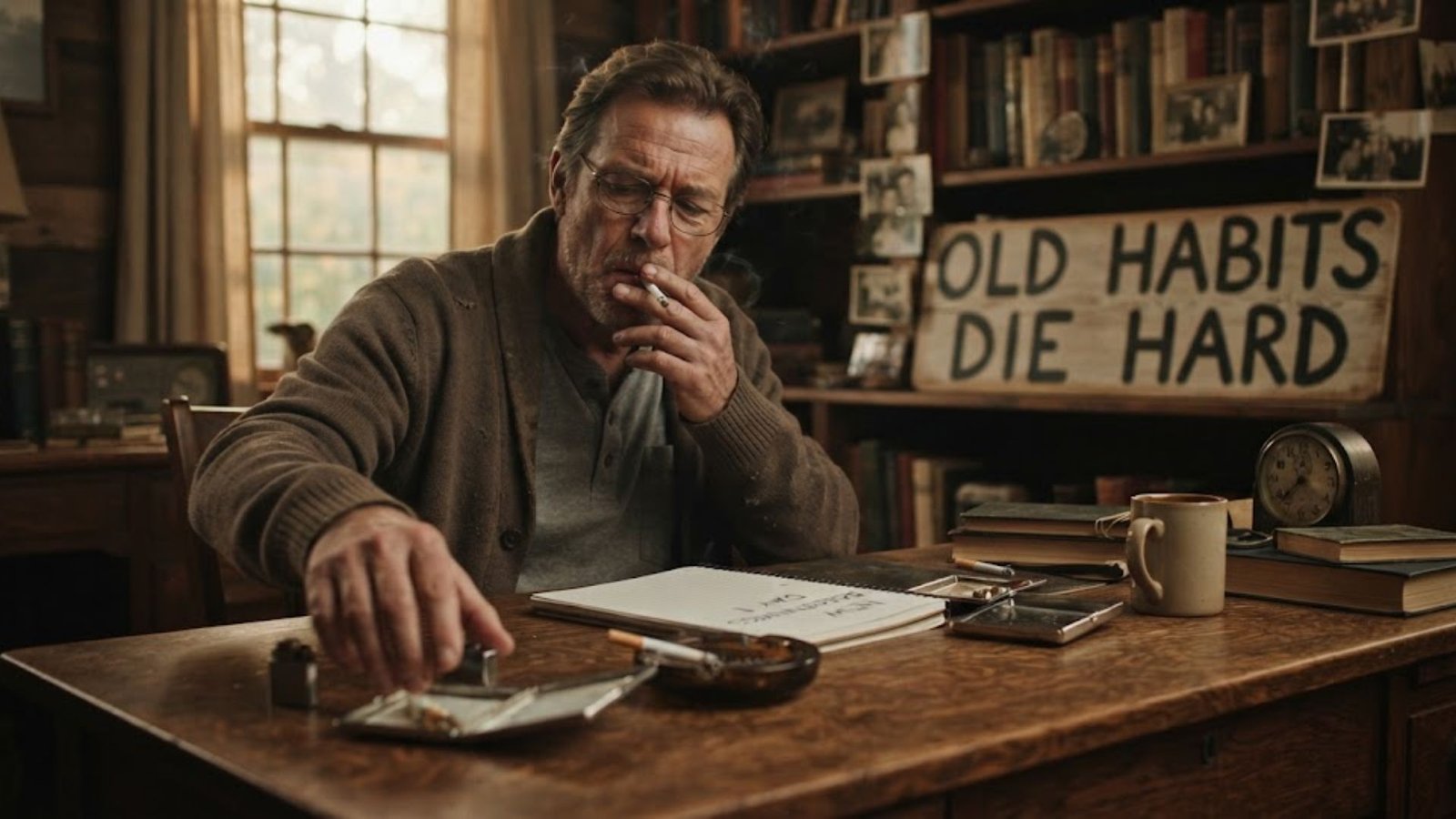
That’s why someone can want to quit smoking for years and still light up during a stressful week. The habit isn’t gone. It’s just quiet.
Where Did the Phrase Come From?
The exact phrase origin isn’t tied to one single author or book. Instead, it grew out of everyday English speech, used to describe how long-term behavior clings on despite our best intentions.
Versions of this idea have appeared in English language history for well over a century. Writers, teachers, and regular folks kept repeating it because it captured something true about human nature.
You’ll find traces of this thinking in older proverbs and common sayings too, long before the exact wording settled into what we use today. Language tends to work that way. A feeling gets repeated so often that it eventually locks into one tidy English phrase.
That’s really why any idiomatic expression survives. It says something people already feel but haven’t put into words themselves, which is exactly why it never sounds outdated no matter how many decades pass.
How to Use Old Habits Die Hard Correctly
In Everyday Conversation
In casual conversation, you might hear a friend say it after failing to stick to a diet. “I ordered fries again. Old habits die hard, I guess.”
It works best when you’re being honest about a small slip, not making excuses for something serious.
At Work
In professional settings, people often use it when talking about outdated workflows or old software. A manager might say, “We switched systems months ago, but old habits die hard, some of the team still emails spreadsheets instead of using the new tool.”
It’s a gentle, non-judgmental way to point out resistance to new processes.
At School or College
Students and teachers use this phrase too. A professor might joke about students still doing math problems by hand instead of trusting a calculator, or a student might admit they still write handwritten notes even after getting a tablet.
It fits naturally into casual academic talk, though it’s best avoided in formal essays.
In Family Life
Family traditions are full of this kind of language. Maybe your grandfather insists on the same greeting rituals every time you visit, or your family sticks to one family recipe during the holidays no matter who suggests something new.
Saying “old habits die hard” here often comes with warmth, not frustration.
Practical Examples in Sentences
Seeing the phrase in context makes it click faster. Here are a few natural examples:
- “She’s tried quitting coffee three times, but old habits die hard.”
- “Dad still drives the same route he used twenty years ago. Old habits die hard.”
- “I know I should switch to digital notes, but old habits die hard.”
- “He keeps checking his phone during meetings. Old habits die hard, even with the new policy.”
Notice how each sentence pairs a specific behavioral pattern with the idiom. That’s the trick to using it well.
Common Situations Where People Use This Idiom
Health and Fitness
This is one of the most common areas. People bring up the phrase when talking about quitting smoking, reducing sugar intake, or trying to start exercising regularly.
Health habits are deeply tied to daily routine, which is exactly why they’re so hard to shift.
Technology
Ever met someone who still prints documents instead of reading on screen? Or someone who refuses to give up physical books for digital books? That’s old habits die hard in action.
Digital habits take time to replace older, more comfortable ones, even when the new option is objectively easier. You’ll see it with people who still prefer paper notes over digital notes, or who trust a printed calendar more than an app on their phone.
Even something as small as mailing a birthday card instead of sending a text message falls into this category. The old way just feels more personal to some people, and that’s reason enough to stick with it.
Workplace Changes
When companies roll out new processes, some employees keep using old methods out of pure comfort. It’s rarely about stubbornness. It’s about familiar routines feeling safer than the unknown.
Family Traditions
Whether it’s weekly family gatherings or how your family handles unexpected guests, traditions repeat because they’re comforting. Even when someone suggests a fresh approach, the old way often wins.
Personal Behaviour
Small, individual quirks fall here too. Biting nails, arriving early everywhere, or keeping spare change in the same spot for years. These are personal, almost invisible habits that rarely change.
Similar Idioms and Related Phrases
A few related phrases carry a similar meaning:
- You cannot teach an old dog new tricks
- Creature of habit
- Stuck in your ways
- Back to square one
Each one touches on resistance to change, though the tone and context can shift slightly depending on which you choose.
Common Mistakes
Thinking It Means Change Is Impossible
This is the biggest misunderstanding. The idiom describes difficulty, not impossibility. People change negative habits into positive habits all the time. It just takes patience and consistent effort.
Using It for Brand New Behaviors
You can’t use this phrase for something someone just started doing. It only applies to long-standing habits, not a one-time slip in a new routine.
Using It in Formal Writing
Avoid dropping this idiom into legal documents or strict academic writing. It fits casual and semi-formal writing much better, like blogs, emails, or friendly presentations.
Confusing Habits With Personality
A habit is a repeated action. Personality is who someone fundamentally is. Saying someone is stubborn because “old habits die hard” mixes up two very different ideas, and it can come across as unfair.
The Psychology Behind Why Old Habits Die Hard
There’s real human psychology behind why this idiom rings true. Every time you repeat an action, your brain builds a stronger connection to it, almost like a shortcut. Over time, that shortcut becomes automatic behavior, meaning you barely have to think about it anymore.
That’s also why stress and uncertainty push people back toward old routines. Your brain reaches for what’s familiar because familiar feels safer, especially when everything else feels shaky. Understanding this can actually take the guilt out of relapsing into an old habit once in a while.
Modern research on habit formation backs this up too. Scientists studying cognitive patterns have found that repeated actions eventually require far less mental effort, which is exactly why they feel so automatic. The more you repeat something, the less your brain has to think about it, and the harder it becomes to simply switch it off.
This is worth remembering the next time you slip back into an old routine. It’s not a lack of self-control. It’s just how the brain is wired to save energy.
Tips to Break Old Habits Even When They Die Hard
Change is slow, but it’s not out of reach. A few things genuinely help:
- Replace the habit instead of just removing it
- Track small wins to build awareness
- Expect a few slips, and don’t treat them as failure
- Practice self-discipline in short, manageable bursts
- Give yourself real time. Habit formation and habit removal both take weeks, not days
None of this requires perfection. It just asks for patience and a bit of persistence.
Why the Idiom Remains Popular
This phrase has stuck around because it’s honest. It doesn’t promise instant change, and it doesn’t shame people for struggling. It simply describes something almost everyone has felt.
You’ll keep hearing it in books, movies, casual chats, and even social media posts, because it captures a universal experience in just four words.
Conclusion
Old habits die hard isn’t a phrase about failure. It’s a phrase about being human. Habits form slowly, and they leave just as slowly, whether that’s a morning routine, a workplace habit, or something tied to family life.
Now that you know the meaning, origin, and correct way to use it, you can drop it into conversation with total confidence. And next time an old habit creeps back in, you’ll know exactly why, and that it doesn’t mean you’ve failed.
FAQs
What does old habits die hard mean?
It means long-standing habits are difficult to change, even when someone genuinely wants to change them.
Is old habits die hard an idiom?
Yes, it’s a well-known English idiom used in everyday speech and writing.
Can old habits die hard refer to good habits?
It can, though it’s used more often for negative habits. Still, breaking a good habit by accident fits the phrase too.
Is old habits die hard positive or negative?
It’s mostly neutral. It simply states a fact about human behavior rather than judging it.
Where can I use old habits die hard?
Use it in casual conversation, informal writing, workplace chats, or friendly presentations. Skip it in formal or legal writing.
What is the difference between old habits die hard and you cannot teach an old dog new tricks?
The dog idiom leans toward permanent resistance to change, while old habits die hard leaves room for slow, gradual change.
Can I use old habits die hard in professional settings?
Yes, as long as the tone stays casual. It works well in team chats or light hearted meetings, but not in formal reports.