SFS Meaning Explained: What Does SFS Mean in Texting?
If you have seen “SFS” pop up in a DM, a Snapchat story, or an Instagram comment, you are not the only one who paused to figure it out. This SFS Meaning Explained guide breaks down the acronym in plain English, covers every platform where it shows up, and shows you exactly how to use it or respond to it. By the end, you will understand SFS as well as any content creator does.
What Does SFS Mean?
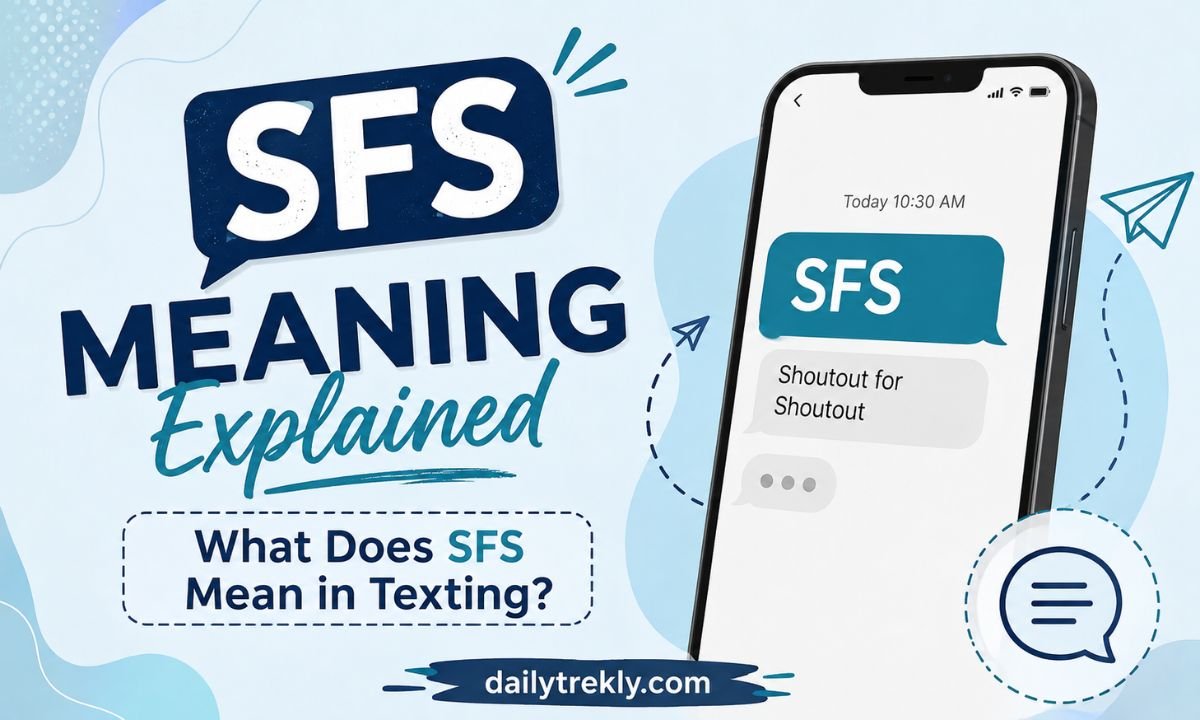
This SFS Meaning Explained section starts with the basics: SFS is an internet acronym used mostly on social media to request a mutual exchange between two users. SFS most commonly stands for “Shoutout for Shoutout,” a promise where one account promotes another account in exchange for the same promotion in return. The exact meaning can shift slightly depending on the platform, but the core idea of “you help me, I help you” stays the same everywhere.
Simple Definition
In one sentence: SFS means two people agree to promote, tag, or interact with each other’s content so both accounts gain more visibility. It is not an official app feature. It is community slang that creators built on their own to grow faster without spending money on ads.
The Origin of SFS
Any complete SFS Meaning Explained overview has to start with where the term came from. SFS grew out of early Instagram influencer culture. As the platform expanded in the early 2010s, small creators needed a free way to reach new audiences. Two users would agree to feature each other’s profile in a post or Story, and the term “Shoutout for Shoutout” became the shorthand for that trade. Snapchat users later adopted the same three letters, and its meaning shifted slightly toward Snap for Snap as streak culture took off. The acronym spread because it solved a real problem: gaining followers without a marketing budget.
How SFS Works (Step-by-Step)
The process is simple and does not require any app tools or payment, which is a big part of why this SFS Meaning Explained walkthrough matters for anyone new to it. Here is how a typical SFS exchange happens:
- One user sends a message asking if the other wants to do an SFS.
- Both users agree on the format, such as a Story post, a feed post, or a Snap.
- Both users agree on the timing, such as posting the same day or within a set hour.
- Each person posts the other’s username, profile link, or content to their own audience.
- Both accounts gain exposure to a new group of potential followers.
Example
Ayesha has 2,000 Instagram followers and Zain has 2,200. Ayesha posts Zain’s profile on her Story with a short caption. Zain does the same for Ayesha a few hours later. Both accounts are now visible to an audience that had never seen them before. This simple back and forth is the clearest real-world example of what SFS means in practice.
What Does SFS Mean in Text

Outside of Instagram and Snapchat, SFS can still appear in regular text messages, especially when friends are discussing social media plans. In a text, SFS almost always keeps its social media meaning: a request or confirmation of mutual promotion. A message like “want to SFS later?” simply means the sender wants to trade shoutouts, tagged posts, or snaps at some point that day. Context clues, such as mentions of followers, Stories, or usernames, confirm the social media meaning rather than any unrelated one.
Different Meanings of SFS (Context Matters)
A big part of any SFS Meaning Explained resource is admitting that SFS is not a fixed term with only one definition. The correct meaning of SFS depends entirely on the platform and the surrounding conversation. Below are the three interpretations you will run into most often.
1. SFS = Shoutout For Shoutout (Most Common)
This is the original and most widely recognized meaning. Two accounts agree to promote one another, usually through a Story, post, or caption mention. It is the standard use on Instagram, TikTok, and Facebook.
2. SFS = Snap For Snap
On Snapchat, SFS often refers to trading snaps back and forth, frequently tied to maintaining a Snapstreak. Instead of promoting a profile, users are simply keeping an active exchange going.
3. SFS = Spam For Spam (Less Common)
In some group chats or engagement circles, SFS means users agree to like, comment, or interact repeatedly on each other’s posts to boost engagement numbers. This version is used far less than the shoutout meaning and can look spammy if overused.
| Meaning | Platform It’s Most Common On | What Actually Happens |
| Shoutout for Shoutout | Instagram, TikTok, Facebook | Users tag or feature each other’s profile |
| Snap for Snap | Snapchat | Users exchange snaps, often for streaks |
| Spam for Spam | Group chats, engagement pods | Users repeatedly like or comment on posts |
SFS Meaning on Different Platforms
Since the letters stay the same but the intent changes, this SFS Meaning Explained comparison breaks the meaning down platform by platform.
SFS on Instagram
On Instagram, SFS almost always means Shoutout for Shoutout. Two accounts feature each other’s username or post in their Story or feed, usually to reach a similar niche audience such as fitness pages, meme accounts, or small businesses.
SFS on Snapchat
On Snapchat, SFS usually means Snap for Snap, though Shoutout for Shoutout is also used. Snapchat’s story format, combined with its streak culture, makes the snap exchange version especially common among teens and young adults.
SFS on TikTok
On TikTok, SFS still leans toward Shoutout for Shoutout, appearing in comment sections as creators ask each other to promote a video or profile. It is less dominant here than on Instagram but still recognizable to active users.
Is SFS Still Effective in 2025?
Yes, but its impact depends heavily on how it is used. SFS can still help small accounts gain visibility in 2025, though it works best as a supplement to good content rather than a replacement for it. Algorithm changes on major platforms now reward genuine engagement over simple follower counts, which changes how effective a random shoutout swap can be.
When SFS Works Well
- Both accounts share a similar niche or audience.
- The follower counts are reasonably close in size.
- The content itself is genuinely worth sharing, not just tagged for exposure.
- The exchange happens occasionally rather than constantly.
When SFS Doesn’t Work
- The two accounts have nothing in common, so new followers do not stick around.
- One account is far larger, making the exchange one-sided.
- SFS requests are sent to strangers on repeat, which can look like spam.
- Followers gained through SFS rarely engage, hurting long-term reach.
Pros and Cons of SFS
Weighing the benefits against the drawbacks is the fairest way to judge SFS, and it rounds out this SFS Meaning Explained breakdown with a balanced view.
Pros
- It is completely free, unlike paid promotions or ads.
- It can introduce your content to a genuinely new audience.
- It builds relationships between creators in the same niche.
- It is quick to set up compared to running a full ad campaign.
Cons
- Follower growth from SFS is often short-lived if the audiences don’t match.
- Overusing it can make a profile look desperate or spammy.
- It offers no guarantee of real engagement or loyal followers.
- Larger accounts often see little benefit from swapping with much smaller ones.
| Factor | Pros | Cons |
| Cost | Free | Time-consuming to arrange |
| Reach | Exposes account to new audience | Audience may not be relevant |
| Growth | Fast follower boost possible | Often low retention |
| Relationships | Builds creator connections | Can feel transactional |
What Does SFS Mean on Instagram
Instagram is where SFS became most popular, and it carries a few extra nuances there beyond the standard shoutout trade. Creators use it to swap Story features, tag each other in captions, or co-promote a single post. Some accounts also run “SFS threads,” where multiple users comment their usernames under one post so everyone can shout each other out at once. On Instagram specifically, SFS is treated as a community growth tool rather than a private message between two friends.
How to Do SFS the Right Way
Doing SFS well takes a bit more thought than simply tagging a random account. Follow these steps for a trade that actually helps both sides:
- Look for accounts in your niche with a similar follower count.
- Message the account directly and propose the exchange clearly.
- Agree on the format, whether it’s a Story, a post, or a caption mention.
- Agree on timing so neither person feels forgotten.
- Write a genuine caption instead of a generic tag.
- Follow through exactly as promised to build trust for future exchanges.
READ MORE: Seen Zone Meaning: What Does Seen Zone Mean in Texting?
Alternatives to SFS
If a straight shoutout swap doesn’t fit your goals, several related strategies can achieve similar growth:
- Collabs: Two creators co-create a single piece of content together instead of just tagging each other.
- F4F (Follow for Follow): Users follow each other’s accounts without any promotional post involved.
- L4L (Like for Like): Users like each other’s posts to boost engagement metrics.
- Paid promotions: Larger accounts charge a fee to feature a smaller account’s content.
- Niche hashtags: Using targeted hashtags to reach an audience organically without any exchange at all.
Common Misunderstandings About SFS
No SFS Meaning Explained guide is complete without clearing up the mix-ups people run into most.
- Mistake: Assuming SFS always means the same thing everywhere. Reality: The meaning shifts between Shoutout for Shoutout, Snap for Snap, and Spam for Spam depending on platform and context.
- Mistake: Confusing SFS with F4F. Reality: SFS involves actively promoting content, while F4F only involves following an account.
- Mistake: Believing SFS guarantees more followers. Reality: Results depend on whether both audiences actually share an interest.
- Mistake: Thinking SFS requires payment. Reality: A traditional SFS exchange is free and based purely on reciprocity.
Final Thoughts
This SFS Meaning Explained guide covers every angle of the acronym, from its Instagram roots to its Snapchat streak connection and its occasional use as Spam for Spam. At its core, SFS is a simple mutual exchange: one person promotes another, and that person returns the favor.
Whether you use it to grow a small account or just wanted to understand a message a friend sent you, this SFS Meaning Explained breakdown should leave no confusion. The next time “SFS?” shows up in your DMs, you will know exactly what is being asked and how to respond with confidence.