Headass Meaning: What It Really Means in Slang, Texting, and Social Media
You saw the word somewhere. A comment, a caption, maybe your cousin’s tweet. And now you’re stuck wondering what a headass actually means.Good news: it’s not that complicated. This is one of those internet slang words that sounds harsh but usually isn’t as serious as it looks.
By the end of this, you’ll know exactly how to use it, when to skip it, and why it’s everywhere on social media right now.
What Does Headass Mean?
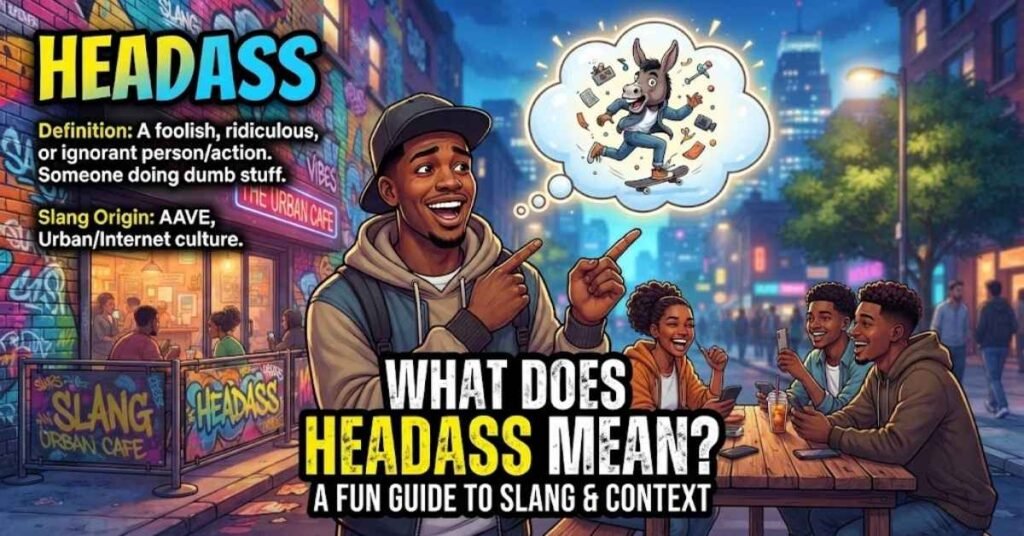
At its core, headass is a playful slang term used to call someone out for doing something foolish, ridiculous, or just plain embarrassing behavior. It’s usually added after a word to describe a specific type of person, like “goofy headass” or “lying headass.”
The word rarely has a literal meaning. Nobody’s actually talking about a head. It’s more about tone. Think of it as a verbal eye roll, something you’d say to a friend who just tripped over nothing.
Context changes everything here. Said with a laugh, it’s teasing. Said with attitude, it can lean toward an actual insult. That flexibility is exactly why so many people get confused about it.
Simple Examples
Here’s how it shows up in everyday talk:
- “You forgot your own birthday, fake headass.”
- “He’s crying over a video game, crying headass.”
- “She’s always 20 minutes late, always late headass.”
Each version pairs the word with a behavior. That pairing is basically the whole formula.
Headass Meaning Table
| Phrase | What It Usually Means | Tone |
| Goofy headass | Someone acting silly or clumsy | Playful |
| Lying headass | Someone caught in a lie | Mocking |
| Loud headass | Someone being too loud or dramatic | Teasing |
| Fake tough guy headass | Someone pretending to be intimidating | Sarcastic |
| Sleepy headass | Someone always tired or slow to respond | Affectionate teasing |
This table isn’t a complete list. New versions get created constantly depending on the cultural context and whatever’s trending that week.
Where Did Headass Come From?
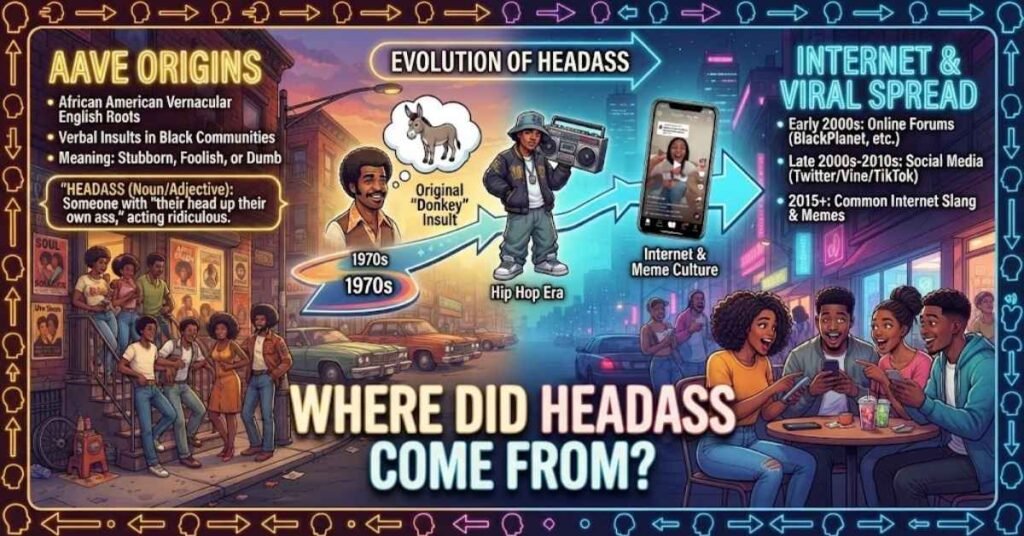
The word has roots in African American Vernacular English, often shortened to AAVE. Like a lot of expressions born in hip hop communities, it spread through music, comedy, and casual speech long before it hit the internet in a big way.
From there, meme culture picked it up and ran with it. Comedy videos, reaction posts, and group chats turned a regional phrase into something used across entirely different audiences.
It’s worth respecting where the phrase comes from. Using it without any awareness of its cultural background is one of the quicker ways to sound out of touch instead of funny.
How People Use Headass in Real Conversations
This is where the word really lives. Not in dictionaries, but in casual conversations, comment sections, and late night group chats.
The tone shifts depending on the platform. What works in a gaming lobby might feel completely different in a Twitter comment, and both are miles away from how it lands in texting between friends.
Common Social Media Examples
On TikTok comments and Instagram captions, headass usually shows up as a punchline. Someone posts a fail video, and the top comment reads something like, “camera-shy headass” or “forgot the words headass.”
Twitter comments tend to use it for online arguments too. Someone makes a bad take, and the replies fill up with variations of the same joke.
Gaming Examples
In gaming chats, especially on Twitch streams, it’s part of the gaming trash talk toolkit. A player who keeps rage quitting might get labeled a “rage quitting headass.”
Same goes for someone camping the entire match or a sweaty player who’s clearly trying way too hard for a casual game. The word fits right into that competitive banter.
Texting Examples
Between friends, it’s usually short and quick. Something like “you left your phone at my place, forgetful headass” fits naturally into a group chat without needing any explanation.
It reads casual, almost like a nickname. That’s part of why it caught on in casual online conversations so fast.
Is Headass Offensive?
Here’s the honest answer: it depends entirely on tone and relationship. Between friends, it’s rarely meant as a real insult. It’s closer to friendly teasing, the verbal version of a nudge in the ribs.
But context matters. If a stranger uses it with genuine hostility, it can absolutely land as disrespectful slang. The words don’t change, but the intent behind them does.
A good rule of thumb: if you wouldn’t say it to someone’s face without a smile, don’t type it either. That single check avoids most misunderstandings.
How Headass Is Different From Similar Slang Terms
People often lump headass in with words like clown, goofy, or idiot. They’re related, but not identical.
Clown usually points at someone being foolish in a public or obvious way, almost like they set themselves up for the joke. Goofy leans softer, more about silly energy than an actual mistake. Corny is different again, aimed at humor or style that feels outdated rather than behavior that’s embarrassing.
Headass sits in its own lane because it’s flexible. You can attach it to almost any behavior, which makes it feel more like a meme driven insult than a fixed traditional insult with one strict meaning.
Why the Phrase Became So Popular
Timing helped a lot. As online culture grew louder and faster, short, punchy reactions started to outperform longer comments. Headass fit that shift perfectly.
It also works as a template. Anyone can plug in a behavior and instantly create a new version, which fuels constant reuse across online communities. That kind of flexibility is rare in slang.
Add in the humor factor, since it almost always makes people laugh instead of getting genuinely upset, and you’ve got a phrase built for viral spread.
When You Should Avoid Using Headass
Some settings just don’t fit. Professional emails, workplace communication, and school essays are the obvious ones. It instantly reads as unprofessional actions, even if you meant it as a joke.
Using it with strangers online is another risky spot. Without an existing relationship, the line between playful teasing and outright aggressive commentary gets blurry fast.
Better Alternatives in Professional Settings
If you need to describe similar behavior in formal communication, try softer, more direct language instead.
- “That decision seems careless” instead of “careless headass.”
- “This approach feels disorganized” instead of anything slang based.
- “Let’s revisit this plan” works better than any teasing phrase in professional settings.
Formal writing rewards clarity, not slang, so save the fun words for your friends.
Common Use Cases for Headass
The phrase shows up across a few very specific situations, and each one has its own flavor.
Playful Roasting Between Friends
This is the most common use. Friends throw it around constantly, usually attached to something small like forgetting plans or tripping over nothing.
It works because everyone involved knows there’s no real harm behind it. That shared understanding is what keeps it firmly in the friendly teasing category.
Meme Captions
Meme captions love this word because it’s short and instantly funny. A random photo paired with “confused headass” or “overthinking headass” needs zero extra explanation.
The image does the work, and the caption just seals the joke.
Gaming Trash Talk
Inside competitive matches, it becomes shorthand for calling out predictable behavior. Someone spamming the same move over and over might get called a “spamming moves headass” between rounds.
It’s competitive, but usually still lighthearted, especially among regular teammates.
Social Media Reactions
Reaction comments on viral posts use it as instant commentary. A dramatic video gets flooded with “dramatic headass” replies within minutes of posting.
It’s become almost a default reaction, similar to how emojis get used without much thought.
Common Mistakes People Make About Headass
A few misunderstandings pop up again and again, so let’s clear them up.
Thinking It Has One Fixed Meaning
The word bends based on what you pair it with. “Smart headass” and “sleepy headass” carry completely different vibes despite sharing the same base word.
Treating it like a single, rigid definition misses the whole point of how it actually gets used.
Assuming It Is Always Friendly
Not every use is affectionate. Tone, timing, and relationship all shape whether it’s a joke or a genuine jab, so context always needs checking first.
Using It in Formal Situations
This mistake happens more than you’d think, especially with younger users who forget where the line sits. A slang word built for casual speech just doesn’t belong in a report or a client email.
Misunderstanding Cultural Context
Ignoring where the phrase comes from can make its use feel careless. A little awareness of its cultural speech patterns and origin goes a long way toward using it respectfully.
Confusing It With Literal Meaning
New readers sometimes take the word at face value, which leads nowhere useful. There’s no literal head involved, ever. It’s purely about behavior and tone.
Examples of Headass in Sentences
A few more natural examples, straight from the kind of conversations where this word actually lives:
- “You brought an umbrella on the sunniest day ever, dramatic headass.”
- “He’s bragging about a game he lost, fake tough guy headass.”
- “She’s dancing in the kitchen at 2 AM, dancing headass.”
- “You’re rich but still asking to split a $4 coffee, rich headass.”
Notice how each sentence pairs a specific action with the label. That pattern is basically the entire grammar of the word.
Is Headass Mainly Used by Younger People?
Mostly, yes. Teenagers, college students, and general social media audiences use it the most, largely because slang tends to spread fastest through younger, more online circles first.
That said, plenty of adults use it too, especially those active in meme communities or gaming spaces. Age matters less than how connected someone is to internet culture in general.
Can Headass Be Used Positively?
Surprisingly, yes. “Smart headass” or a well timed compliment wrapped in the word can flip the usual mocking tone into something closer to admiration with a wink.
It still keeps that teasing edge, but the underlying message becomes a compliment instead of a jab. That duality is honestly one of the more interesting parts of how this slang works.
How to Respond When Someone Calls You a Headass
If a friend drops this on you, the easiest response is usually a laugh and a comeback of your own. Taking it seriously in a clearly joking context often reads as more awkward than the original comment.
If it feels genuinely mean, though, trust that instinct. Not every use is playful, and it’s fine to call that out directly instead of pretending it didn’t land wrong.
Conclusion
At the end of the day, headass is just a flexible, expressive piece of modern slang. It shifts meaning based on tone, platform, and who’s saying it, which is exactly what makes it so widely used across texting, gaming, and social media.
Use it with people who get the joke, skip it in formal settings, and you’ll never run into trouble with it.
FAQs
What does headass mean in texting?
It usually points out foolish or embarrassing behavior in a light, joking way between friends.
Is headass an insult?
It can be, but most of the time it’s friendly teasing rather than a genuine attack.
Why do people say goofy headass?
“Goofy” adds a silly, clumsy flavor to the phrase, making it feel more playful than harsh.
Is headass bad language?
It’s informal rather than offensive, though it’s best avoided in professional settings.
What is the difference between headass and clown?
Clown points at someone making an obvious public mistake, while headass covers a much wider range of everyday behavior.
Where is headass most commonly used?
Mostly on TikTok, Twitter, Instagram, and inside gaming communities.
Can adults use the word headass?
Absolutely, plenty of adults use it casually, especially within online and gaming spaces.
Does headass have a literal meaning?
No, it’s purely about tone and behavior, with no literal meaning attached to it at all.